










What's Happening?
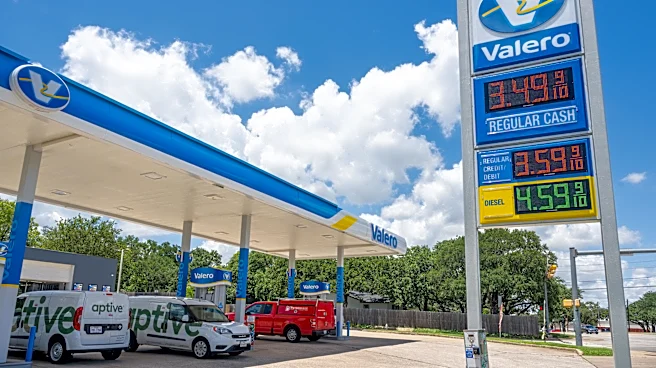
Consumer confidence in the U.S. saw a modest increase in June, as reported by the Conference Board, with its index rising by 0.6 points to 91.2. This improvement is attributed to a decline in gas prices, which have fallen to an average of $3.85 per gallon
from a high of $4.50 following the U.S.-Iran conflict. Despite this, consumer confidence remains below pre-pandemic levels, which regularly exceeded 120. The report indicates that while consumer spending has remained resilient, the overall economic outlook is still clouded by inflation and a less optimistic view of the labor market. The Labor Department is expected to release its monthly jobs report soon, with forecasts suggesting a solid gain of 100,000 jobs and an unemployment rate holding steady at 4.3%.
Why It's Important?
The slight uptick in consumer confidence is crucial as it reflects the public's perception of economic stability, which can influence spending behaviors. Consumer spending is a significant driver of the U.S. economy, and its resilience despite inflationary pressures suggests a potential for continued economic growth. However, the persistent low confidence levels highlight ongoing concerns about inflation and job market conditions. The anticipated jobs report will provide further insights into the labor market's health, which could impact future consumer confidence and spending patterns.
What's Next?
The upcoming jobs report will be a key indicator of economic health, potentially influencing Federal Reserve policy decisions. If job growth meets or exceeds expectations, it could bolster consumer confidence further. However, if the report shows weaker-than-expected job creation, it may exacerbate concerns about economic stability. Additionally, continued monitoring of gas prices and their impact on inflation will be essential in assessing future consumer sentiment.