

What's Happening?
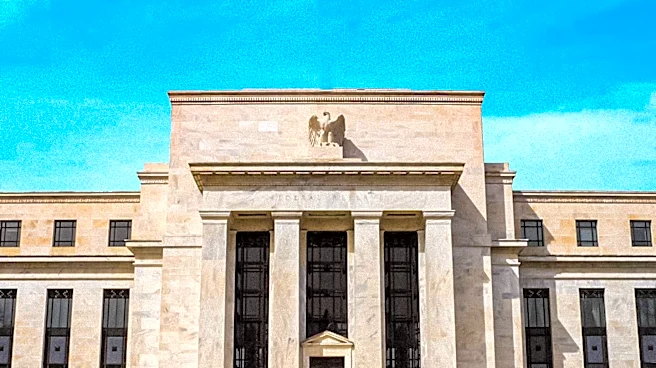
Goldman Sachs has stated that a September interest-rate increase by the Federal Reserve is "very unlikely." Chief economist Jan Hatzius, in a note published Sunday, cited recent economic data, including sluggish retail sales, lackluster jobs numbers,
and decelerating price pressures, as reasons for this assessment. Hatzius believes that market expectations for future rate increases remain too aggressive, given the current economic climate. He emphasized that after two months of softer jobs and inflation data, it would be difficult for any Federal Open Market Committee (FOMC) members who typically favor lower rates to support a hike. Goldman's baseline forecasts anticipate further improvement in inflation rather than a renewed deterioration as the year progresses.
Why It's Important?
This assessment from Goldman Sachs carries significant weight for the U.S. economy and financial markets. A decision by the Federal Reserve to pause rate hikes would signal confidence in the current trajectory of inflation and economic stability, potentially easing concerns about a recession. For businesses, stable interest rates can provide more predictable borrowing costs, encouraging investment and expansion. Consumers might see a more stable lending environment for mortgages and other loans. The bond market is particularly sensitive to Fed policy, and Goldman's view on the unlikelihood of a September hike could influence Treasury yields, especially the two-year yields which are highly responsive to Fed policy shifts. This outlook also impacts investor sentiment, as it suggests a potentially less hawkish stance from the central bank than previously anticipated by some market participants.
What's Next?
Following Goldman Sachs's analysis, market participants will closely monitor upcoming economic data releases, particularly inflation reports and employment figures, to gauge the Federal Reserve's next moves. The Federal Open Market Committee's meeting on September 15-16 will be a critical event, where the Fed will announce its decision on interest rates and provide updated economic projections. While Goldman Sachs views a September hike as unlikely, the market will be looking for confirmation from the Fed's statements and any indications regarding future policy. The focus will then shift to the possibility of a rate increase in later meetings, with current market expectations, as cited by CoinDesk, pointing towards January for the next potential 25-basis-point increase. The U.S. Treasury yield curve's behavior, particularly its potential to steepen due to cooling inflation and diminishing rate-hike expectations, will also be a key indicator.
Beyond the Headlines
Beyond the immediate implications for interest rates, Goldman Sachs's perspective highlights a broader narrative about the U.S. economy's path toward normalization after a period of high inflation. The debate over whether inflation is transitory or persistent has been central to economic policy, and Goldman's forecast of continued improvement suggests a more optimistic outlook. This could influence long-term investment strategies, as businesses and individuals make decisions based on expectations of future economic stability. Furthermore, the discussion around the U.S. Treasury yield curve's positioning and its connection to fiscal outlook concerns points to underlying structural issues that could impact the nation's financial health over time. The interplay between monetary policy, inflation, and fiscal responsibility remains a critical area for the U.S. economy, with far-reaching consequences for all stakeholders.