





What's Happening?
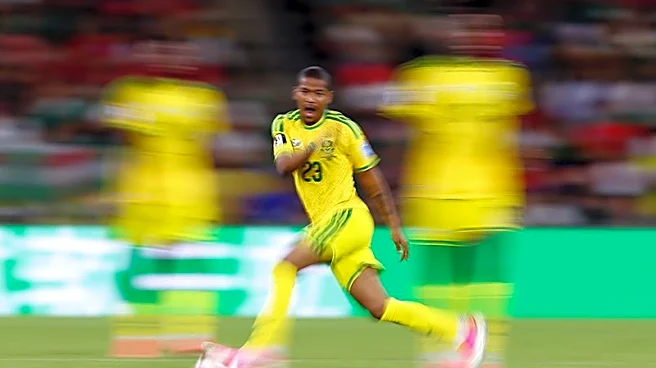
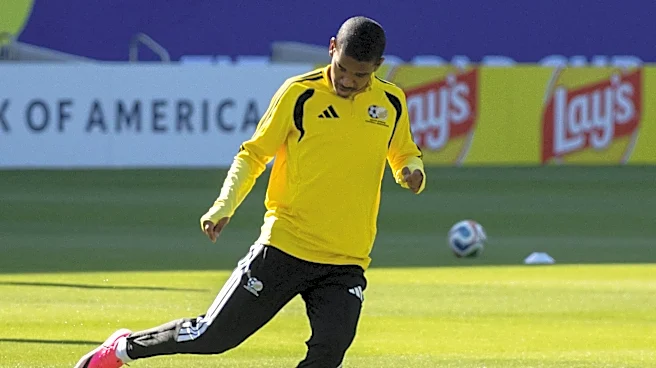
Jayden Adams, a midfielder for South Africa's national soccer team and Mamelodi Sundowns, has died at the age of 25. His death was confirmed by the South African Football Players Union. Adams recently participated in the FIFA World Cup, where he played
a significant role in South Africa's historic advancement to the knockout rounds. He started in two of the group stage matches and was a substitute in the victory over South Korea. The cause of his death has not been disclosed, and an inquest has been opened by the Cape Town Central police. Adams' passing has been met with widespread mourning from the football community, including statements from FIFA President Gianni Infantino and South Africa's Minister of Sports, Arts & Culture, Gayton McKenzie.
Why It's Important?
The death of Jayden Adams is a significant loss to South African football, as he was a promising young talent who had already achieved considerable success, including winning the CAF Champions League with Mamelodi Sundowns. His contributions to the national team during the World Cup were pivotal, and his passing leaves a void in both his club and national team. The incident highlights the fragility of life and the impact of sudden losses on sports communities. It also underscores the importance of mental health and support systems for athletes dealing with personal and professional pressures.
What's Next?
An investigation into the circumstances surrounding Adams' death is underway, with the police conducting an inquest. The football community is expected to continue honoring his memory through tributes and moments of silence at matches. Mamelodi Sundowns and other organizations may also initiate support for Adams' family and teammates as they cope with this loss. The incident may prompt discussions on athlete welfare and the pressures faced by young sports professionals.
Beyond the Headlines
Adams' death may lead to increased awareness and dialogue about the mental health challenges faced by athletes, especially those in high-pressure environments like international competitions. It could also influence policies regarding support systems for players dealing with personal tragedies while maintaining professional commitments. The football community might explore ways to better support young athletes in managing the dual pressures of personal loss and professional expectations.