






What's Happening?
U.S. Representative Glenn 'GT' Thompson, R-Pa., along with a bipartisan group of colleagues including Representatives Mike Kelly, R-Pa., Brad Schneider, D-Ill., Jeff Hurd, R-Colo., John Larson, D-Conn., Josh Riley, D-N.Y., and Marilyn Strickland, D-Wash.,
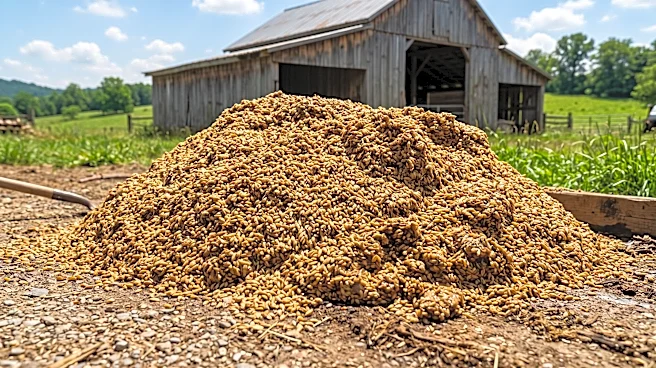
has introduced the 'Brews to Barns Act.' This proposed legislation aims to create a federal excise tax credit for breweries that donate their spent grain for local agricultural use. The bill seeks to foster partnerships between brewers and farmers, allowing farmers and ranchers to utilize spent grain in agricultural production, thereby lowering their input costs. Representative Thompson emphasized that this initiative supports local small businesses and prevents waste, building upon existing collaborations between brewers and farmers in states like Pennsylvania.
Why It's Important?
The 'Brews to Barns Act' holds significant importance for both the agricultural and brewing industries, as well as for local economies. By providing a tax incentive, the bill aims to reduce operational costs for breweries, making it more economically viable for them to donate spent grain. This, in turn, offers a valuable resource to farmers and ranchers, who can use the grain as feed or fertilizer, thereby lowering their own input costs and promoting sustainable agricultural practices. The legislation strengthens local supply chains by fostering symbiotic relationships between two key sectors. This collaborative effort can lead to increased efficiency, reduced waste, and enhanced economic stability for small businesses in both industries, ultimately benefiting local communities through job creation and economic resilience.
What's Next?
The 'Brews to Barns Act' will now proceed through the legislative process in Congress. It will likely be assigned to relevant committees for review, debate, and potential amendments. Supporters of the bill, including the Brewers Association, will likely advocate for its passage, highlighting its benefits for small businesses and environmental sustainability. The bipartisan nature of the bill suggests it may have a smoother path through Congress compared to more contentious legislation. If passed, breweries would be able to claim a federal excise tax credit for their spent grain donations, and farmers would gain access to a more consistent and affordable supply of agricultural inputs. The next steps involve committee hearings, potential floor votes in both the House and Senate, and ultimately, presidential assent.
Beyond the Headlines
Beyond its immediate economic benefits, the 'Brews to Barns Act' touches upon broader themes of sustainability and circular economy principles. By incentivizing the repurposing of a brewing byproduct, the bill promotes a more efficient use of resources and reduces waste, aligning with growing environmental concerns. This legislative effort could serve as a model for other industries to find innovative ways to minimize waste and create beneficial inter-industry partnerships. Furthermore, it underscores the role of government in fostering local economic ecosystems and supporting small businesses through targeted incentives. The act also highlights the often-overlooked connections between seemingly disparate industries, demonstrating how collaboration can lead to mutual benefits and contribute to a more resilient local economy.