




What's Happening?
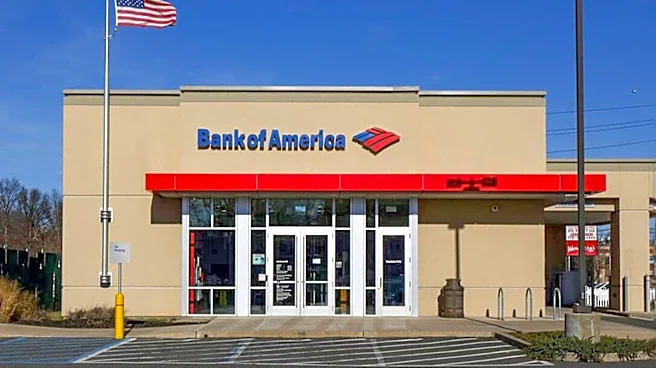
Bank of America has hired 1,000 contractors to address software vulnerabilities identified by artificial intelligence models, such as Anthropic’s Mythos. According to CEO Brian Moynihan, these contractors were brought on in the second quarter of this
year and are working alongside approximately 3,000 existing employees to patch these flaws. This move comes as the financial sector faces an increasing challenge where the discovery of vulnerabilities by AI is significantly outpacing the ability to remediate them. J.P. Morgan previously reported that vulnerability discovery is outpacing remediation by a factor of 16.5x. The rapid identification of security flaws by advanced AI models necessitates a substantial human effort to validate, patch, test, and deploy fixes, highlighting a growing demand for cybersecurity talent.
Why It's Important?
This development underscores a critical shift in the cybersecurity landscape, particularly for the U.S. financial industry. The ability of AI to rapidly uncover software vulnerabilities means that financial institutions, which are prime targets for cyberattacks, must significantly scale up their remediation efforts. The hiring of 1,000 contractors by Bank of America illustrates the immediate and substantial investment required to keep pace with AI-driven threat detection. This trend will likely lead to increased demand for cybersecurity professionals and contractors across the U.S. business sector, potentially driving up costs for talent and influencing corporate IT budgets. Furthermore, it highlights the dual nature of AI: while it can enhance security by finding flaws, it also creates a new challenge by accelerating the rate at which these flaws are exposed, demanding a more agile and robust human response.
What's Next?
The immediate next step for Bank of America and similar institutions will be to integrate these new contractors effectively into their existing cybersecurity operations to systematically address the backlog of AI-discovered vulnerabilities. This will involve streamlining processes for validation, patching, testing, and deployment of fixes. Other U.S. financial institutions and large corporations are likely to follow suit, increasing their investment in human capital for cybersecurity remediation. This could lead to a competitive market for skilled cybersecurity professionals and a greater emphasis on training and upskilling existing IT staff. Additionally, there may be a push for more automated remediation tools to complement human efforts, as the current rate of vulnerability discovery suggests that human-only solutions may struggle to keep up in the long term.
Beyond the Headlines
The reliance on a large contingent of contractors to address AI-discovered vulnerabilities points to a broader systemic challenge in cybersecurity: the 'remediation backlog' created by advanced AI. While AI excels at identifying potential weaknesses, the nuanced work of fixing them often requires human judgment, expertise, and careful implementation to avoid introducing new problems. This situation raises questions about the long-term sustainability of relying on extensive human intervention for every AI-identified flaw. It also highlights the ethical and practical implications of AI in cybersecurity, where the technology can both protect and inadvertently create new operational burdens. The need for rapid, large-scale human deployment to counter AI-generated insights could reshape workforce development strategies and the allocation of resources within the U.S. tech and financial sectors, emphasizing a blend of AI-driven detection and human-led remediation.