









What's Happening?
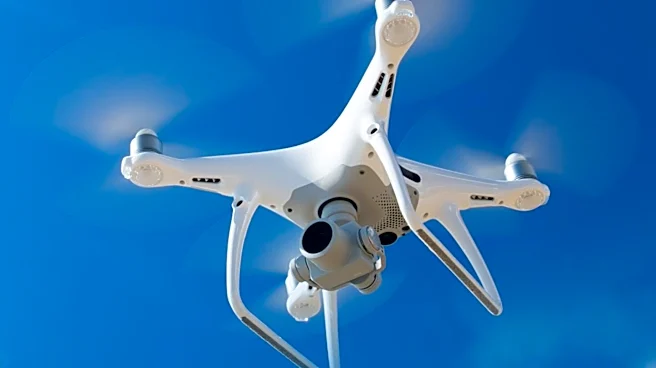
Engineers at Northwestern University have developed a drone, named 'Phantom Twist,' that utilizes motion blur to become nearly invisible to the human eye. The drone spins rapidly, making it difficult to see clearly, and is designed to blend into its surroundings.
This innovation could lead to drones that monitor wildlife, survey environments, and inspect infrastructure with minimal visual disruption. The research was presented at the Robotics: Science and Systems 2026 conference, highlighting the potential applications of low-visibility drones in various fields.
Why It's Important?
The development of the Phantom Twist drone represents a significant advancement in drone technology, with potential applications in environmental monitoring and infrastructure inspection. By reducing visual disruption, these drones can perform tasks without altering natural behavior or drawing attention. This innovation could lead to more efficient and less intrusive data collection, benefiting researchers and industries that rely on drone technology. Additionally, the concept of using motion blur to achieve low visibility could inspire further research and development in robotics and drone design.
What's Next?
The Northwestern team plans to refine the Phantom Twist drone by using more transparent materials and quieter propulsion systems to further reduce its visibility and noise. As the technology advances, these drones could be deployed in various settings, from wildlife conservation to urban infrastructure maintenance. The research may also prompt other institutions and companies to explore similar approaches to drone design, potentially leading to new innovations in the field.