






What's Happening?
HDF Energy has chosen Topsoe as the technology licensor for its BaseBlue Power™ project, a 250 MW power plant slated for West Texas. This facility aims to provide reliable, low-carbon electricity to data centers starting in 2030. The project will utilize
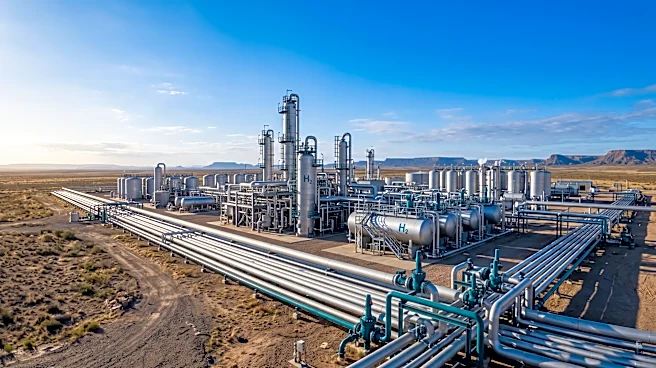
Topsoe's SynCOR™ autothermal reforming (ATR) technology to convert natural gas from the Permian Basin into approximately 400 metric tons of low-carbon hydrogen daily. A key feature of the process is the capture of 98% of the CO2 generated, amounting to about 1.1 million metric tons annually, which will then be compressed and stored underground. The hydrogen will power approximately 250 MW of Proton Exchange Membrane (PEM) fuel cells, delivering electricity directly to data center facilities. This approach addresses the growing demand for uninterrupted power from data centers while also tackling their carbon footprint.
Why It's Important?
This project is significant for the U.S. energy sector and the rapidly expanding data center industry. Data centers require substantial and uninterrupted electricity, and this initiative offers a solution that combines reliability with reduced carbon emissions. By converting natural gas into low-carbon hydrogen and capturing a significant portion of CO2, the project provides a cleaner alternative to conventional gas-fired plants, which often have long lead times and higher emissions. The modular and scalable design of BaseBlue Power™ could serve as a model for other regions facing similar energy demands and environmental pressures. This development also highlights the increasing role of carbon capture and storage technologies in achieving decarbonization goals within industrial and energy sectors, particularly in areas with abundant natural gas resources like the Permian Basin.
What's Next?
The BaseBlue Power™ plant is projected to begin supplying electricity to data centers in West Texas by 2030. HDF Energy and Topsoe will proceed with the detailed engineering, procurement, and construction phases of the project. The successful implementation of this 250 MW plant could pave the way for similar projects, potentially expanding the use of low-carbon hydrogen and carbon capture technologies in other energy-intensive sectors across the U.S. The project's performance in terms of reliability, cost-effectiveness, and emissions reduction will be closely watched, as it could influence future energy infrastructure investments and regulatory frameworks concerning data center power supply and carbon emissions.
Beyond the Headlines
This project represents a deeper trend towards integrating advanced energy solutions to meet the complex demands of modern infrastructure. The combination of natural gas, hydrogen production, carbon capture, and fuel cell technology showcases an innovative approach to energy generation that balances economic viability with environmental responsibility. It also underscores the evolving role of natural gas as a transition fuel, not just for direct combustion but as a feedstock for cleaner energy carriers like hydrogen. The focus on data centers, which are critical for the digital economy, highlights the ethical and practical imperative to ensure their operations are sustainable. This initiative could also stimulate further research and development in PEM fuel cell technology and carbon capture solutions, driving technological advancements and potentially creating new economic opportunities in the green energy sector.