





What's Happening?
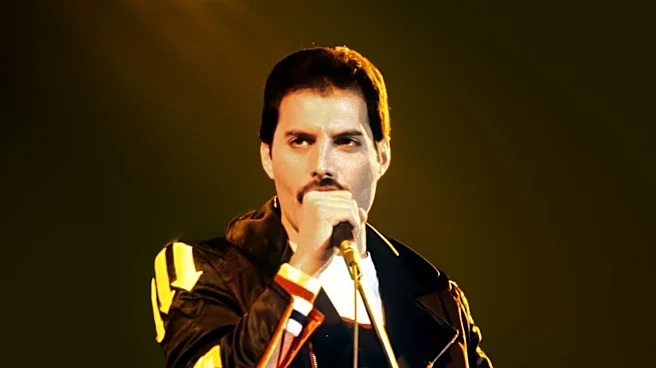
A new book, 'A Life in Lyrics: The Official Creative Legacy of Freddie Mercury,' co-authored by Freddie Mercury and his former fiancée Mary Austin, sheds light on the surprising origins and evolution of Queen's iconic 1975 hit, 'Bohemian Rhapsody.' The book, which
draws from Mercury's personal notebooks and musical sketches discovered after his 1991 death, reveals early drafts and alternative ideas for the song. Initially conceived as 'The Cowboy Song' with the line 'Mama, just killed a man' in 1968, the song underwent significant transformations. Mercury even considered the title 'Mongolian Rhapsody' before settling on 'Bohemian Rhapsody.' Austin recounts Mercury's intense focus during its composition, often working through the night and even waking from sleep to jot down ideas. The book also details the band's initial struggle with EMI executives over the song's nearly six-minute length, with Mercury refusing to cut it. Its eventual success was partly due to DJ Kenny Everett, who repeatedly played the full track on Capital Radio, leading to overwhelming public demand before its official release.
Why It's Important?
This publication offers an unprecedented look into the creative genius of Freddie Mercury and the meticulous process behind one of the most influential songs in music history. For U.S. music enthusiasts and scholars, it provides invaluable insights into the artistic development of a global phenomenon, highlighting the dedication and vision required to produce such a complex and enduring piece. The story of 'Bohemian Rhapsody's' creation, from its humble beginnings as a 'cowboy song' to its operatic grandeur, underscores the importance of artistic integrity and perseverance against commercial pressures. The book also reinforces the song's cultural impact, noting its resurgence in popularity through films like 'Wayne's World' and the 'Bohemian Rhapsody' biopic, demonstrating its lasting relevance across generations in the U.S. and globally. Understanding these origins enriches the appreciation of Queen's legacy and Mercury's songwriting prowess, solidifying their place in the pantheon of rock music.
What's Next?
The release of 'A Life in Lyrics' is expected to reignite interest in Queen's discography and Freddie Mercury's solo work, potentially leading to increased sales and streaming of their music in the U.S. and worldwide. Music historians and biographers may use these new details to re-evaluate existing narratives about the band and Mercury's creative process. The book could also inspire new documentaries, academic studies, or tribute projects exploring the depth of Mercury's songwriting. For fans, it offers a deeper connection to the artist, providing a more intimate understanding of his inspirations and struggles. The insights into the song's construction might also influence contemporary songwriters and producers, demonstrating the value of unconventional structures and artistic ambition. Furthermore, the book's success could pave the way for similar archival releases from other iconic musicians, offering fans and scholars alike a treasure trove of previously unseen creative materials.
Beyond the Headlines
Beyond the immediate revelations about 'Bohemian Rhapsody,' this book delves into the broader themes of artistic obsession, the creative process, and the tension between artistic vision and commercial viability. Mercury's dedication to his craft, even to the point of being consumed by it, highlights the often-solitary and demanding nature of groundbreaking artistry. The narrative also touches upon the role of key allies, like Mary Austin and DJ Kenny Everett, in nurturing and championing artistic works that defy conventional norms. This underscores the importance of support systems and gatekeepers in the music industry who are willing to take risks on innovative creations. The enduring appeal of 'Bohemian Rhapsody' across decades and its ability to resonate with new audiences through different media (films, biopics) speaks to its universal themes and timeless musicality, cementing its status not just as a song, but as a cultural touchstone that transcends generations and geographical boundaries.