

What's Happening?
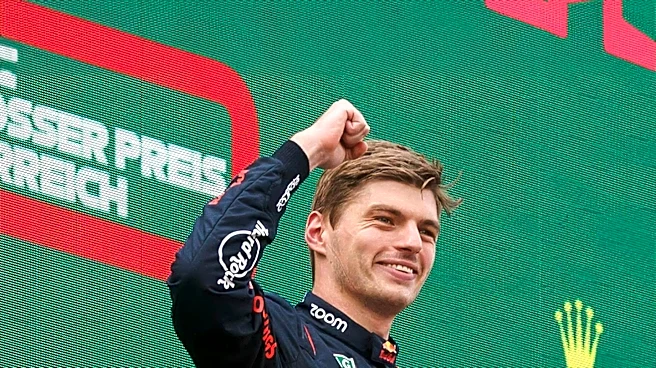
Max Verstappen provided a humorous explanation for his frustrated team radio message during the São Paulo Grand Prix, joking that his car "doesn't speak English." The four-time world champion encountered issues with the clutch and engine braking on his RB22,
leading to a conversation with his power unit over the radio. Red Bull subsequently swapped the engine after the session, which resulted in a grid penalty for Verstappen, forcing him to start from 21st position. Despite the penalty, he managed to recover to second place in the race. Verstappen elaborated on the technical problem, describing inconsistent behavior where the rear wheels would lock up during downshifts in some corners, while in others, the engine would push too hard when coming off the brake.
Why It's Important?
This incident highlights the critical role of vehicle reliability and the intricate technical challenges faced by Formula 1 teams and drivers. Even for a top-tier driver like Verstappen and a leading team like Red Bull, unexpected technical glitches can significantly impact race performance and strategy. The need for an engine swap and the resulting grid penalty underscore the stringent regulations and high stakes in F1, where even minor issues can have major consequences. Verstappen's ability to recover from a P21 start to P2 also demonstrates his exceptional driving skill and the competitive advantage of the Red Bull car, even when facing adversity.
What's Next?
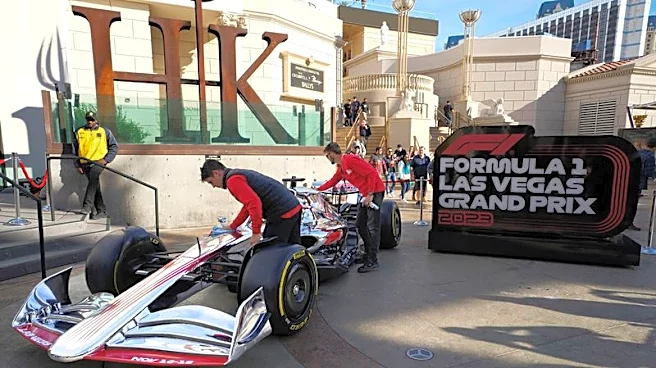
Red Bull Racing will likely conduct a thorough investigation into the engine issues experienced by Verstappen's RB22 to prevent similar problems in future races. Ensuring optimal engine performance and reliability is paramount for maintaining their competitive edge. For Verstappen, overcoming such technical hurdles reinforces his reputation as a resilient and adaptable driver. The team's ability to quickly diagnose and address the problem, even if it meant a grid penalty, shows their commitment to maximizing performance, which will be crucial as the season progresses and in preparation for upcoming races like the Las Vegas Grand Prix.
Beyond the Headlines
Verstappen's humorous take on a serious technical issue offers a glimpse into the high-pressure environment of Formula 1, where drivers often use humor to cope with intense situations. It also subtly points to the advanced and complex nature of modern F1 cars, where even the most sophisticated machinery can develop unpredictable faults. The incident also underscores the constant battle between human skill and mechanical perfection in motorsport, where drivers must adapt to and manage their vehicles' quirks. This interaction between driver and machine, and the team's rapid response, is a testament to the engineering prowess and operational efficiency required to succeed in F1.