




What's Happening?
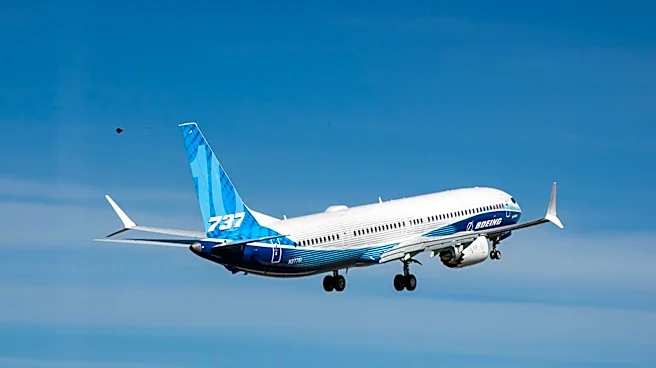
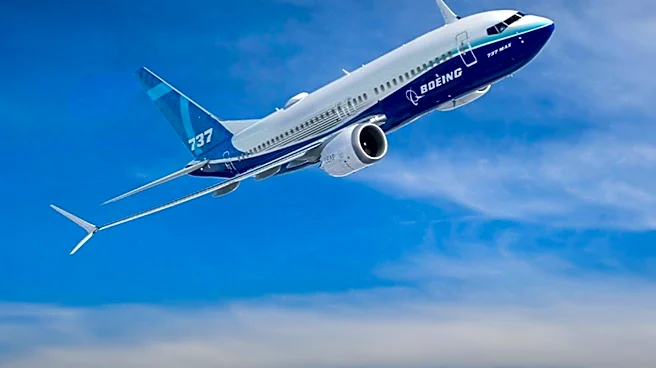
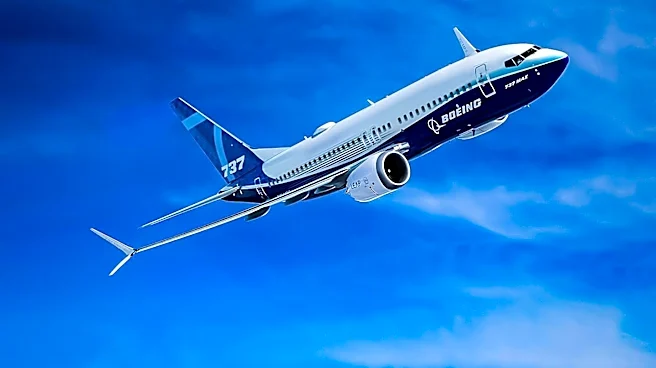
Boeing has successfully completed the final certification flight for its 737-10 aircraft, marking a significant milestone in the aircraft's development. The 737-10, the largest model in the 737 MAX family, underwent a rigorous flight test program that
included 976 flights and over 2,060 flight hours. This program was designed to validate the aircraft's systems and performance under extreme conditions. Key updates tested include the 737 Engine Anti-Ice system and the enhanced Angle of Attack system, both of which aim to improve safety and reduce erroneous warnings. The completion of these tests is a crucial step towards the aircraft's certification, expected in 2026, with customer deliveries anticipated in 2027.
Why It's Important?
The completion of the 737-10's certification flight is a pivotal moment for Boeing, as it seeks to expand its market share in the narrow-body aircraft segment. The 737-10 is expected to offer airlines improved efficiency and capacity, which are critical factors in the competitive aviation market. Successful certification and subsequent deliveries could enhance Boeing's financial performance and reputation, especially following previous challenges with the 737 MAX series. Airlines stand to benefit from the aircraft's advanced features, potentially leading to cost savings and increased passenger capacity.
What's Next?
Following the completion of the certification flight, Boeing will focus on finalizing the certification process, which includes regulatory approvals. The company will also prepare for the transition of test aircraft into customer-ready configurations, involving the removal of test equipment and installation of passenger amenities. As the aircraft moves closer to entering service, airlines will likely begin planning for integration into their fleets, which could involve pilot training and route planning. The aviation industry will be watching closely to see how the 737-10 performs in commercial operations.