
What's Happening?
Stellantis' U.S. subsidiary, FCA US, has initiated a voluntary recall for 848,511 vehicles because of a radio software error. This defect may prevent the rearview camera image from displaying on the vehicle's
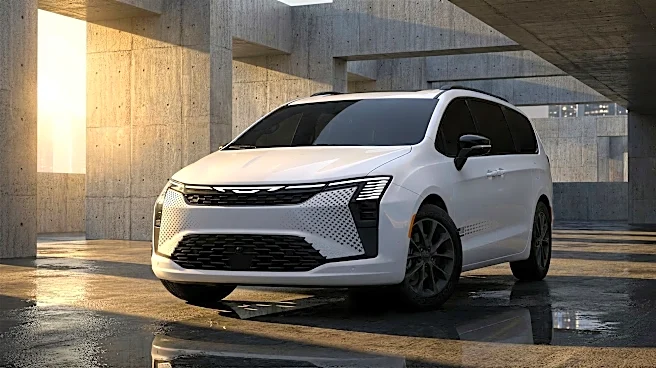
infotainment screen when the driver shifts into reverse. The recall population in the U.S. includes model year 2026-2027 Chrysler, Dodge, Jeep, and Ram vehicles, specifically versions of the Chrysler Pacifica, Dodge Charger, Ram 1500 and 2500, and Jeep Cherokee, Grand Cherokee, Wagoneer, and Wrangler. An additional 83,000 vehicles in Canada are subject to the same recall. Stellantis advises drivers that if the rearview camera image does not appear, they should remain aware of their surroundings and use their rearview and side mirrors when backing up. The automaker has not received any reports of accidents or injuries related to this camera issue. This recall follows a separate action last month by FCA US involving nearly 1.3 million Ram 1500 pickups due to improperly secured seat belt buckle anchors.
Why It's Important?
This recall highlights ongoing challenges within the automotive industry regarding the reliability of mandated safety features, specifically rearview cameras. Since May 1, 2018, the National Highway Traffic Safety Administration (NHTSA) has required rearview cameras on all vehicles sold in the U.S. Despite this mandate, data compiled by Bloomberg estimates that 21 million vehicles have been recalled for backup camera issues since the regulation took effect. The recurrence of such faults, even years after the mandate, indicates a systemic issue in either software development, component manufacturing, or integration across various OEMs. For consumers, the failure of a rearview camera compromises a critical safety feature designed to prevent accidents and injuries, particularly in low-speed maneuvering. For Stellantis, and the broader automotive sector, these recalls can lead to significant financial costs associated with repairs, logistical challenges in implementing software updates, and potential damage to brand reputation. The need for drivers to resort to traditional mirror usage underscores a regression in expected safety functionality.
What's Next?
Stellantis plans to mail recall notices to affected customers starting in September, providing additional information and instructions. Drivers of the recalled models will receive an over-the-air radio software update, and a prompt will appear on the vehicle's infotainment screen once the update is available. This over-the-air update mechanism is a modern approach to addressing software-related recalls, potentially streamlining the fix for many owners without requiring a dealership visit. However, the effectiveness and reach of these updates will be crucial. The formal recall report from the NHTSA has not yet been published, which will provide more detailed technical information about the defect and the proposed remedy. Given the history of similar recalls from other major manufacturers like Ford and Toyota, regulatory bodies will likely continue to scrutinize the implementation and reliability of rearview camera systems across the industry, potentially leading to further investigations or stricter compliance measures.
Beyond the Headlines
The recurring issues with rearview cameras across multiple automakers, including Stellantis, Ford, and Toyota, point to a deeper industry-wide challenge in integrating complex software and hardware systems for safety features. While rearview cameras are a critical safety mandate, their consistent failure due to software bugs or component issues raises questions about the robustness of current automotive software development and quality control processes. This trend could accelerate the adoption of more rigorous testing protocols and potentially lead to new industry standards for software validation in safety-critical systems. Furthermore, the reliance on over-the-air updates, while convenient, also introduces new cybersecurity considerations and the need for secure update mechanisms. The ethical implication lies in the balance between technological advancement and ensuring fundamental safety, especially when a mandated safety feature proves unreliable. This situation may also influence consumer trust in advanced vehicle technologies, prompting a demand for greater transparency and reliability from manufacturers.