



What's Happening?
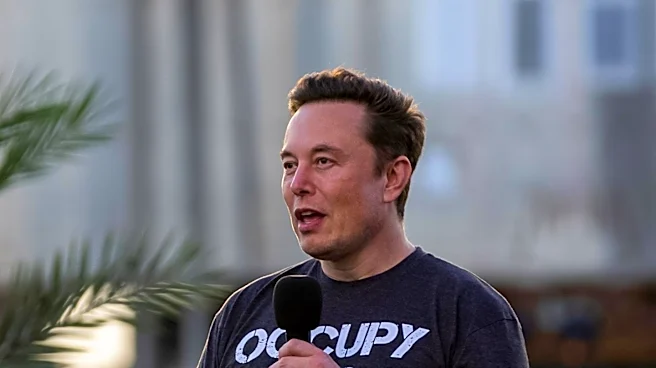
Elon Musk has issued a warning regarding a potentially severe funding shortage for AI compute in the coming year, emphasizing the extreme difficulty in deploying large-scale AI infrastructure. This statement comes in response to Keras founder François
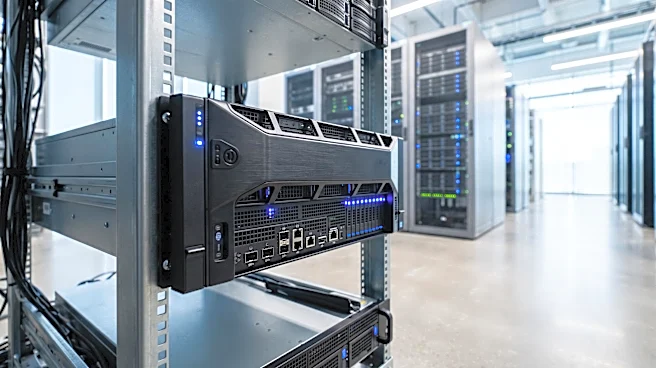
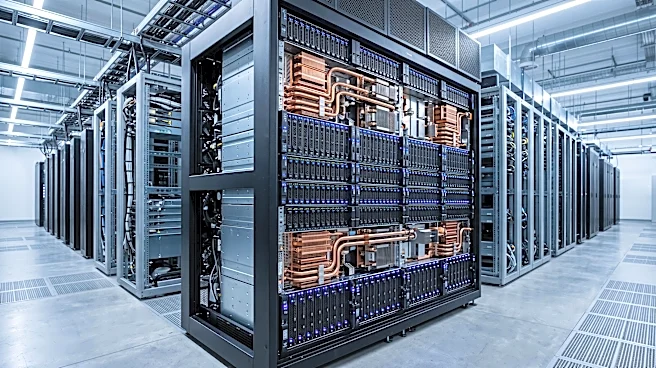
Chollet, who suggested that AI compute demand has not yet peaked and that current market pullbacks present a buying opportunity. Musk highlighted the significant challenges involved in operationalizing massive compute investments, including the need for extensive cooling infrastructure and the maintenance of stable, reliable performance. He pointed out a critical cash-flow gap, noting that several months typically pass between paying for compute capacity and generating revenue from it. This delay, even if only a few months, could necessitate hundreds of billions of dollars in additional working capital, raising questions about the source of such funding amidst accelerating buildout plans.
Why It's Important?
Musk's warning underscores a significant financial and logistical hurdle for the rapidly expanding artificial intelligence industry. A severe funding shortage could slow down the development and deployment of advanced AI technologies, impacting various sectors that rely on AI for innovation and efficiency. Companies heavily invested in AI infrastructure, or those planning significant AI-driven initiatives, could face delays or increased costs. The debate between Musk and Chollet highlights differing perspectives on the AI market's trajectory, with Musk focusing on immediate operational and financial constraints, and Chollet suggesting long-term growth potential. This divergence in views could influence investment strategies and market sentiment, potentially leading to a more cautious approach from investors and a re-evaluation of AI project timelines across the U.S. tech landscape.
What's Next?
The AI industry will likely face increased scrutiny regarding its funding models and operational efficiencies in light of Musk's concerns. Companies and investors may need to reassess their financial projections and strategies for AI infrastructure development. The potential for a funding gap could lead to consolidation within the AI compute sector, as smaller players might struggle to secure necessary capital. Furthermore, the discussion may prompt a re-evaluation of government and private sector investment in AI research and development, with a focus on sustainable funding mechanisms. The coming months will reveal whether Musk's predictions materialize into a widespread funding crisis or if the industry finds innovative ways to bridge the cash-flow gap and continue its rapid expansion.
Beyond the Headlines
The discussion surrounding AI compute funding extends beyond immediate financial concerns, touching upon the broader implications of AI's societal integration. A slowdown in AI development due to funding issues could affect the pace of technological advancement in areas like healthcare, autonomous systems, and scientific research. It also raises questions about the concentration of AI power, as only well-capitalized entities might be able to navigate significant funding challenges. The debate also highlights the inherent tension between rapid technological innovation and the practical realities of infrastructure development and financial sustainability. This situation could lead to a more mature and realistic assessment of AI's growth trajectory, moving away from unbridled optimism towards a more grounded understanding of its economic and logistical requirements.