





What's Happening?
Agricultural carbon credits are emerging as a mechanism to connect improved farming practices with carbon-market opportunities. These credits represent verified greenhouse gas emission reductions or carbon dioxide removals achieved through eligible farming activities,
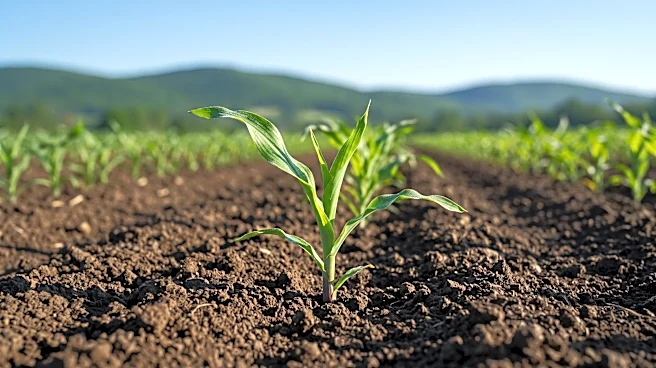
with one credit typically equaling one metric tonne of carbon dioxide equivalent (CO2e). Farmers can generate these credits by implementing sustainable practices such as improved fertilizer management, reduced soil disturbance, planting cover crops, or increasing soil organic carbon. However, simply adopting these practices does not guarantee credit generation; projects must demonstrate measurable climate benefits under an approved methodology. This involves establishing a credible baseline, accurately measuring carbon, accounting for emissions, and meeting the specific requirements of a recognized crediting program. The process of carbon sequestration in agriculture involves plants absorbing CO2 during photosynthesis and storing carbon in soil organic matter through roots, leaves, and crop residues. While some carbon is released back into the atmosphere through decomposition, effective management can lead to increased soil carbon stocks. The effectiveness of these practices is highly dependent on local climate, soil conditions, crop type, and existing farming methods.
Why It's Important?
The development of agricultural carbon markets is important because it provides a new financial incentive for farmers to adopt environmentally beneficial practices. By monetizing carbon sequestration and emission reductions, these markets can help offset the costs associated with transitioning to more sustainable farming methods, potentially increasing farmers' income and improving the economic viability of their operations. This initiative also contributes to broader climate change mitigation efforts by encouraging the reduction of greenhouse gas emissions from the agricultural sector, which is a significant contributor to global emissions. The focus on verified climate benefits ensures that the credits represent genuine environmental improvements, fostering integrity in the carbon market. Furthermore, the emphasis on practices like reduced tillage, cover cropping, and improved nutrient management can lead to enhanced soil health, increased biodiversity, and better water retention, offering co-benefits beyond carbon sequestration. This market mechanism can drive innovation in agricultural techniques and data collection, as accurate measurement and monitoring are crucial for credit generation and verification.
What's Next?
For farmers interested in participating in agricultural carbon markets, the next steps involve understanding the specific methodologies and requirements of various crediting programs. This includes assessing their current farming practices, establishing a baseline of emissions or carbon stocks, and identifying eligible practices that can lead to verifiable carbon benefits. Projects will need to invest in accurate measurement techniques, which may involve soil sampling, carbon modeling, and meticulous record-keeping. Farmers should also consider the financial feasibility of such projects, weighing potential credit revenues against implementation, monitoring, and verification costs. The market demand for agricultural carbon credits will continue to evolve, influenced by corporate sustainability goals, regulatory frameworks, and the overall growth of voluntary carbon markets. Collaboration among multiple farms could help distribute certain project costs, making participation more accessible. As the market matures, there may be increased standardization of methodologies and greater support for farmers in navigating the complexities of carbon credit generation.
Beyond the Headlines
The rise of agricultural carbon credits signifies a deeper shift towards integrating environmental stewardship into economic models. This approach moves beyond traditional regulatory compliance by creating a market-driven incentive for ecological improvements. However, it also raises ethical and practical considerations. Ensuring the 'additionality' of carbon credits—meaning the emission reductions or removals would not have occurred without the carbon market incentive—is crucial for the integrity of the system. There are also challenges related to the permanence of carbon sequestration in agricultural soils, as changes in land management or natural events could release stored carbon. The equitable distribution of benefits and access to these markets for small-scale farmers is another important aspect, as the initial investment and technical expertise required could create barriers. This market also highlights the increasing value placed on natural capital and ecosystem services, potentially transforming how agricultural land is managed and valued in the long term. It underscores a growing recognition that sustainable land use is not just an environmental imperative but also an economic opportunity.