



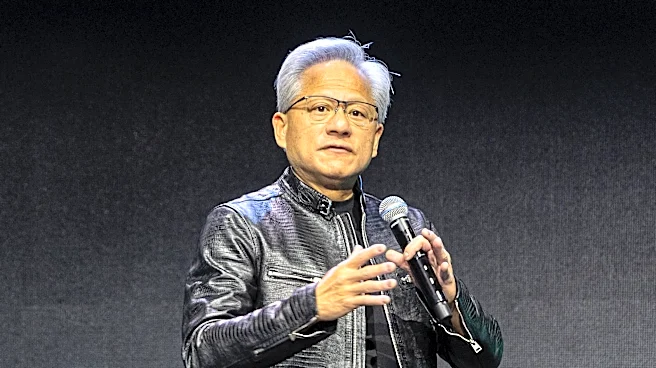


What's Happening?
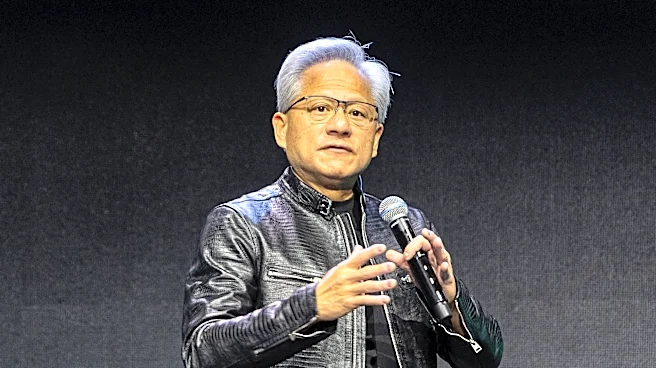
NVIDIA CEO Jensen Huang has resigned due to compliance violations stemming from a relationship with a direct subordinate, Kimberly Powell, the head of the healthcare business unit. This follows an earlier revelation in early November about a relationship with Alice
Huang, a senior executive at Singapore-based Megaspeed. While Jensen Huang initially attempted to frame the first incident as a private matter, the subsequent disclosure of the relationship with Powell, a direct report, escalated the situation to a 'one-shot deal' under U.S. corporate governance standards, according to Miyakawa. The board of directors reportedly requested his resignation, which Huang submitted around mid-November. This development has led to significant uncertainty regarding NVIDIA's future leadership and organizational structure, as the company has historically operated with a flat structure under Huang's direct oversight of approximately 60 individuals. The company's stock price dropped by about 13% on the day the resignation was announced, and its market value decreased by approximately one-third within a month.
Why It's Important?
Jensen Huang's resignation from NVIDIA carries significant implications for the U.S. technology sector and the company's market position. NVIDIA is a dominant player in the GPU market, crucial for AI and cloud computing. The departure of its long-standing CEO, especially under circumstances involving compliance violations, introduces leadership instability at a critical time. This event could impact investor confidence, as evidenced by the immediate drop in stock price and market value. The company's unique flat organizational structure, heavily reliant on Huang's direct leadership, will likely undergo significant changes, potentially affecting its operational efficiency and innovation pace. Furthermore, the allegations of GPUs being routed to China via Megaspeed, if proven, could lead to further scrutiny and potential legal repercussions under U.S. export control laws, impacting NVIDIA's international business and the broader semiconductor supply chain.
What's Next?
The immediate focus for NVIDIA will be the selection of a new CEO and the restructuring of its leadership. Potential successors mentioned include Apple's Johny Srouji, Arm system talents, and former CFO Colette Kress, who is currently serving as interim CEO. The company's flat organizational structure, which has been a hallmark of Huang's leadership, is expected to evolve, potentially leading to a more conventional hierarchical model. This shift could alter NVIDIA's corporate culture and decision-making processes. Additionally, the ongoing investigation into the alleged routing of GPUs to China through Megaspeed remains a critical concern. Jensen Huang is expected to testify before Congress in December regarding these allegations. The outcome of this investigation and the enforcement of remote access regulations for GPUs in China will significantly influence NVIDIA's market access and compliance strategies.
Beyond the Headlines
The resignation of Jensen Huang highlights the increasing scrutiny on corporate governance and ethical conduct within U.S. tech companies, particularly concerning relationships with subordinates. This incident underscores the 'one-shot deal' nature of such violations in American corporate culture, contrasting with potentially more lenient approaches in other regions. The broader implications extend to the talent landscape in Silicon Valley, where the allure of high-value stock options and the potential for new ventures by successful founders can drive significant wealth creation but also contribute to rising housing costs and talent migration. The comparison between U.S. and Japanese employee stock option vesting rules, as noted by Miyakawa, reveals differing approaches to employee incentives and mobility, which can influence the dynamics of talent acquisition and retention in the global tech industry. The ongoing geopolitical tensions and export controls related to advanced technology, particularly GPUs, further complicate the operational environment for multinational corporations like NVIDIA, emphasizing the need for robust compliance frameworks.