







What's Happening?
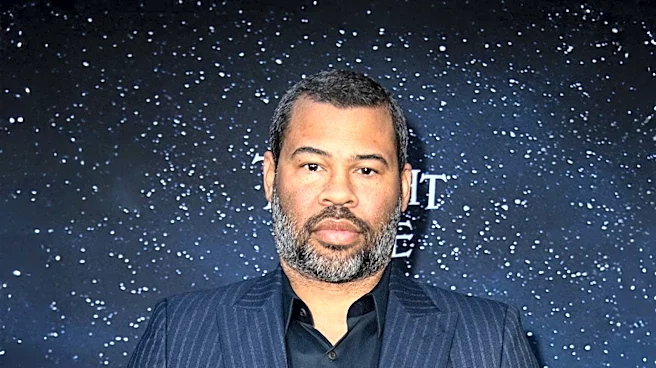
Filmmaker Jordan Peele's 2019 horror film, 'Us,' drew significant inspiration from the 1960 'Twilight Zone' episode titled 'Mirror Image.' Peele, who also hosted 'The Twilight Zone' reboot in 2019, has been a long-time admirer of the original series.
The core concept of 'Us,' which features doppelgängers attempting to replace their original counterparts, directly echoes the themes explored in 'Mirror Image.' The 'Twilight Zone' episode itself was reportedly inspired by creator Rod Serling's real-life experience of encountering someone who looked remarkably like him. Peele confirmed in a Rolling Stone interview that 'Mirror Image' was a key influence, praising its terrifying, beautiful, and elegant storytelling for opening up his imagination. This connection highlights how classic television continues to influence contemporary horror cinema.
Why It's Important?
This revelation underscores the enduring impact of classic American television on modern filmmaking, particularly within the horror genre. Jordan Peele's work, including 'Get Out,' 'Us,' and 'Nope,' has redefined contemporary horror, often incorporating social commentary and psychological depth. The influence of 'The Twilight Zone' on 'Us' demonstrates how foundational narratives and thematic elements from past media can be reinterpreted and revitalized for new audiences. For the U.S. entertainment industry, this signifies the value of intellectual property and the potential for older works to inspire new creative endeavors. It also highlights Peele's skill in transforming classic concepts into original, critically acclaimed, and commercially successful films, solidifying his position as a significant voice in American cinema.
What's Next?
Given Jordan Peele's continued success and his demonstrated appreciation for classic horror and suspense, it is likely that future projects from the filmmaker may continue to draw inspiration from a diverse range of cinematic and television history. This approach could lead to further re-imaginings or thematic explorations of established genre tropes, potentially introducing classic narratives to new generations of viewers. The success of 'Us' and Peele's other films suggests a continued appetite for intelligent, thought-provoking horror that blends original storytelling with subtle nods to its predecessors. Audiences can anticipate more films from Peele that push the boundaries of the genre while maintaining a connection to its rich history.
Beyond the Headlines
The influence of 'The Twilight Zone' on 'Us' extends beyond mere plot points, touching upon deeper cultural and psychological anxieties. 'Mirror Image' explored themes of identity, paranoia, and the unsettling idea of encountering an exact replica of oneself, which 'Us' amplifies with its exploration of societal 'others' and the hidden selves within us. This connection highlights how horror, particularly in Peele's hands, can serve as a powerful medium for social commentary and introspection. It also speaks to the cyclical nature of storytelling, where timeless fears and philosophical questions are continually re-examined through new lenses. The success of 'Us' demonstrates that audiences are receptive to horror that not only frightens but also provokes thought about human nature and societal structures.