
What's Happening?
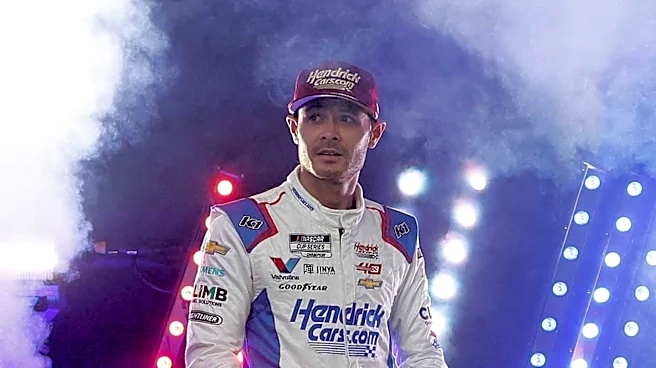
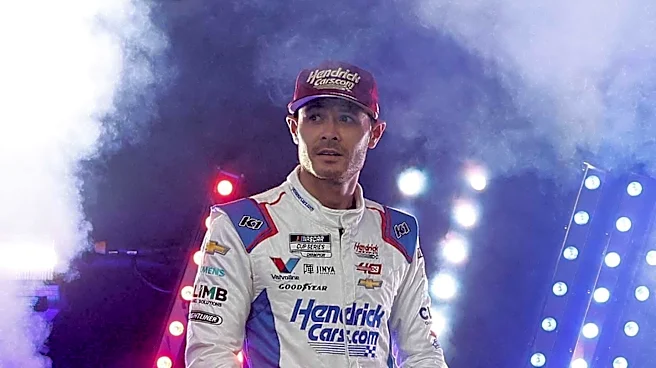
Kyle Larson secured his first superspeedway victory at Talladega, a win that has ignited claims of manipulation among NASCAR fans. On the final lap, after being knocked back to 11th place, fellow Chevrolet
driver Ross Chastain pushed Larson from behind, propelling him to the front. Larson then passed two other Chevrolet drivers, Ricky Stenhouse Jr. and William Byron, to win the race. Byron finished second, just 0.041 seconds behind. Prior to the race, there were rumors in the garage area, shared by Danielle Trotta on X, suggesting that Chevrolet had instructed its teams to assist Larson, particularly to help him gain stage points. Fans on social media expressed skepticism, with some alleging that other Chevrolet drivers intentionally yielded positions. NASCAR, however, stated that all Chevrolet cars were at full throttle in the final turns and found no evidence of drivers giving up positions. They also ruled that Larson's wheels did not go fully below the yellow line, a prohibited area at Talladega.
Why It's Important?
This controversial win for Kyle Larson carries significant implications for NASCAR's integrity and fan perception. Allegations of team manipulation, even if denied by the league, can erode trust among the fanbase and raise questions about the fairness of competition. The incident highlights the unique dynamics of superspeedway racing, where drafting and team alliances can play a crucial role, often blurring the lines between strategic cooperation and unfair advantage. For Chevrolet, the controversy could cast a shadow over Larson's achievement and potentially fuel rivalries with other manufacturers like Ford and Toyota, who are constantly vying for competitive edge. The incident also underscores the power of social media in shaping narratives around sporting events, as fan reactions quickly amplified the claims of manipulation. Maintaining competitive balance and ensuring transparent officiating are paramount for NASCAR to preserve its credibility and appeal to its audience.
What's Next?
The controversy surrounding Kyle Larson's Talladega win is likely to continue to be a talking point among NASCAR fans and competitors. While NASCAR has officially cleared Larson and the Chevrolet teams of any wrongdoing, the perception of manipulation may persist, particularly on social media. This incident could lead to increased scrutiny of team tactics and alliances in future superspeedway races. NASCAR may face pressure to further clarify or reinforce rules regarding team orders and on-track cooperation to prevent similar controversies. For Larson, who is now 73 points ahead of Denny Hamlin with two races left and aiming for his third Cup title, the focus will shift to his performance in upcoming races, particularly Martinsville. His ability to secure the championship will either validate his season or keep the Talladega controversy alive as a point of contention.
Beyond the Headlines
The Talladega incident transcends a simple race outcome, touching upon deeper themes of sportsmanship, competitive ethics, and the role of team dynamics in individual sports. While team strategies are a fundamental part of racing, the line between legitimate cooperation and unfair advantage can be subjective and highly debated. This event could spark broader discussions within NASCAR about the balance between individual driver achievement and manufacturer or team objectives. It also highlights the challenge sports leagues face in managing public perception, especially in the age of instant social media commentary. The long-term impact might include a re-evaluation of how team alliances are perceived and potentially regulated, ensuring that the spirit of fair competition remains paramount. The incident also serves as a reminder of the passionate, sometimes skeptical, nature of sports fans, who demand transparency and fairness in their beloved competitions.