





What's Happening?
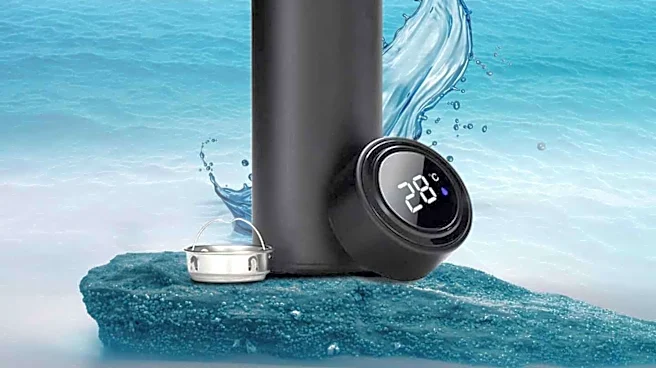
The water bottle industry is undergoing a significant transformation, driven by evolving consumer needs for enhanced functionality and health consciousness. A key trend is the integration of smart technology into water bottles, featuring embedded applications
that monitor hydration levels and LED indicators to remind users to drink. These advancements aim to provide comprehensive wellness data by potentially integrating with broader fitness and health monitoring systems. Beyond smart features, some water bottles are also being designed with multifunctional benefits, such as incorporating weights to double as workout tools, thereby supporting both hydration and fitness goals. Manufacturers are also focusing on sustainability, utilizing eco-friendly materials like biodegradable and recyclable options, and offering personalized design choices to cater to individual lifestyles and preferences.
Why It's Important?
This evolution in smart water bottle technology signifies a broader shift in consumer product expectations, moving towards devices that offer integrated health and wellness solutions. For U.S. consumers, this means access to tools that can actively support hydration and fitness, potentially leading to improved public health outcomes. The emphasis on eco-friendly materials also reflects growing environmental consciousness among consumers, pushing U.S. manufacturers to adopt sustainable practices and materials to meet market demand. This trend could stimulate innovation in material science and manufacturing processes within the U.S., creating new business opportunities and potentially influencing supply chains. Companies that successfully integrate these technological and sustainable elements are likely to gain a competitive edge in the market, impacting consumer choices and industry standards.
What's Next?
The future of the water bottle market is expected to see continued advancements in personalization and customization, with manufacturers offering more tailored designs, colors, logos, and ergonomic shapes. Further integration with fitness and health monitoring systems is anticipated, providing users with more comprehensive wellness data. Cross-industry collaborations, particularly between tech companies and water bottle manufacturers, are likely to drive groundbreaking innovations, leading to more advanced hydration solutions. This multidisciplinary approach could redefine customer expectations and industry standards. Consumers can expect to see a wider array of smart, sustainable, and personalized water bottles that serve as extensions of their identity and lifestyle, with ongoing efforts to reduce environmental impact through material and production innovations.
Beyond the Headlines
The rise of smart water bottles touches upon deeper implications concerning data privacy and consumer behavior. As these devices collect personal hydration and activity data, questions about data security, ownership, and how this information is used by manufacturers or integrated with other health platforms will become increasingly relevant. The trend also highlights a cultural shift towards 'quantified self' – where individuals use technology to track and optimize various aspects of their lives, including health. This could lead to a greater reliance on technology for basic bodily functions, potentially altering our intrinsic understanding of hydration cues. Furthermore, the push for eco-friendly materials, while positive, also raises questions about the true lifecycle impact of these 'smart' components and the energy consumption associated with their production and disposal, necessitating a holistic view of sustainability.