


What's Happening?
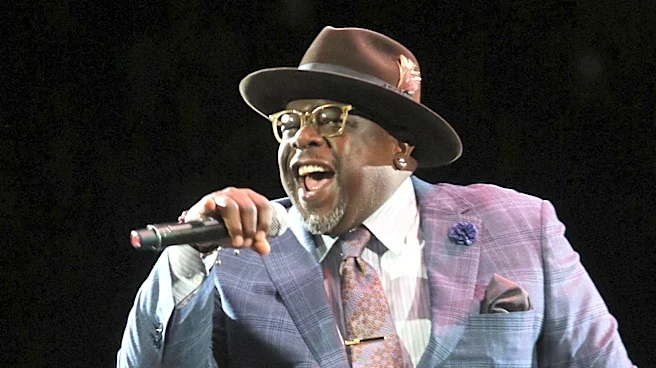
During an appearance on Big Boy's Neighborhood, legendary comedian and actor Cedric The Entertainer addressed the long-standing allegations of joke-stealing made by fellow comedian Katt Williams. The controversy resurfaced following Williams' viral interview
on Shannon Sharpe's 'Club Shay Shay' podcast, where he accused Cedric of stealing one of his comedy routines. Cedric clarified that these allegations were not new, as Williams had raised similar claims years prior, and the issue had been addressed between them. He firmly rejected the accusation, explaining that comedians often explore similar subjects, but similarities in premises do not automatically constitute plagiarism. Cedric emphasized that his comedy is rooted in his individual experiences and unique perspectives, referencing his fast-talking family members and the creative origins of his 'Bomicious' and 'CJ' routines. He also discussed how the rise of podcasts and social media has transformed personal disagreements into public spectacles, citing other entertainment disputes like those involving Mo'Nique and D.L. Hughley, and the rivalry between Drake and Kendrick Lamar.
Why It's Important?
Cedric The Entertainer's interview on Big Boy TV is significant for the comedy industry and broader entertainment landscape. It highlights the complexities of creative ownership and originality in stand-up comedy, a field where material is highly personal and intellectual property can be difficult to define. The resurgence of these allegations, amplified by viral podcasts, underscores the profound impact of social media on public discourse and celebrity reputations. This incident brings to the forefront the challenges comedians face in protecting their work and managing public perception in an era where accusations can spread rapidly and widely. Furthermore, Cedric's perspective on the transformation of private disagreements into public spectacles reflects a larger trend in entertainment, where platforms like podcasts and social media increasingly mediate conflicts, often encouraging audiences to take sides without full context. This shift affects how artists resolve disputes, maintain professional relationships, and manage their legacies, moving away from private resolutions towards public trials by opinion.
What's Next?
Cedric The Entertainer's detailed response on Big Boy TV aims to provide his side of the story and potentially mitigate the ongoing controversy stemming from Katt Williams' 'Club Shay Shay' appearance. While it may not entirely quell public debate, it offers a counter-narrative that could influence public opinion and shift the focus from accusation to a more nuanced discussion about creative processes in comedy. The interview might encourage other comedians to speak out about their experiences with material originality and the impact of social media on their profession. It could also prompt further discussions within the comedy community about establishing clearer guidelines or norms for addressing allegations of joke-stealing. For Cedric, this public clarification is a step towards reaffirming his legacy and focusing on his craft, rather than allowing viral controversies to define his career. The broader entertainment industry may continue to grapple with how to manage and respond to disputes that become amplified through digital platforms.
Beyond the Headlines
Beyond the immediate dispute, Cedric The Entertainer's interview touches upon deeper ethical and cultural implications within the entertainment industry. The debate over joke-stealing raises fundamental questions about intellectual property, artistic inspiration, and the fine line between influence and appropriation in creative fields. It highlights the unique vulnerability of stand-up comedians, whose primary product is their original thought and delivery, making allegations of theft particularly damaging. The discussion also reflects a broader cultural shift in how conflicts are mediated and consumed. The rise of 'viral moments' and 'cancel culture' on social media has transformed personal disagreements into public entertainment, often prioritizing sensationalism over nuanced understanding. This trend can have lasting consequences for individuals' careers and mental well-being, forcing public figures to navigate a constantly evolving landscape of digital scrutiny. Cedric's emphasis on his decades-long career and focus on his craft serves as a commentary on resilience and the importance of a sustained body of work in an industry increasingly driven by fleeting online controversies.