


What's Happening?
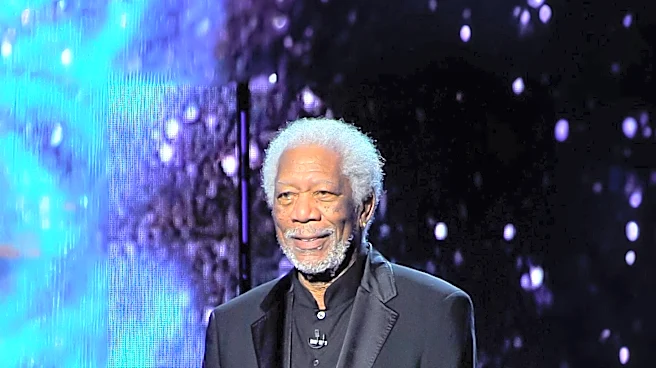
Morgan Freeman and his producing partner Lori McCreary, co-founders of Revelations Entertainment, are actively engaging with the evolving role of Artificial Intelligence in filmmaking. While Freeman acknowledges AI's potential to enhance storytelling,
he expresses significant concerns regarding privacy and the unauthorized replication of his voice and likeness. He has been a frequent target of AI copycats, leading to instances where his voice has been used to create content he never endorsed. McCreary, with a background in computer science, views AI as a tool that can revolutionize filmmaking, particularly for independent creators, by enabling more ambitious visual effects. However, both emphasize the critical need for consent and proper compensation when AI is used to repurpose performers' work. The discussion highlights a distinction between AI as a post-production tool, which Hollywood has utilized for years, and generative AI, which can create new content resembling actors without their direct input. This nuanced perspective comes amidst broader industry concerns, with actors like Nicolas Cage expressing fear over AI's potential to 'steal' their bodies for digital use.
Why It's Important?
The discussion by Morgan Freeman and Lori McCreary is crucial for the U.S. entertainment industry as it navigates the complex ethical and practical implications of AI. Their stance underscores the tension between technological advancement and the protection of artists' rights and intellectual property. The unauthorized use of voices and likenesses, as experienced by Freeman, highlights a significant challenge to privacy and control for performers. The industry's response, including the actors' union securing contracts requiring consent for AI repurposing, indicates a growing recognition of these issues. The potential for generative AI to democratize filmmaking by making high-end visual effects accessible to independent creators could reshape production landscapes, offering new opportunities but also raising questions about job displacement and the value of human artistry. How Hollywood addresses these concerns will set precedents for other creative industries grappling with AI integration, influencing future legal frameworks, compensation models, and ethical guidelines for AI use in creative works.
What's Next?
The entertainment industry is expected to continue grappling with the rapid advancements of AI, particularly generative AI. Revelations Entertainment is actively working on projects that incorporate AI, necessitating new legal frameworks for documenting consent and compensation for on-screen talent. This pioneering effort will likely influence industry standards as other production companies explore similar technologies. The ongoing dialogue between artists, studios, and technology companies will be critical in shaping how AI is integrated responsibly. Further developments are anticipated in legal battles concerning unauthorized AI replication of voices and likenesses, potentially leading to new legislation or stricter enforcement of existing intellectual property laws. The industry will also likely see continued efforts to define the ethical boundaries of AI use, especially concerning the creation of digital doubles and synthetic performances, as stakeholders aim to balance innovation with the protection of human creativity and rights.
Beyond the Headlines
The debate surrounding AI in Hollywood, as articulated by Morgan Freeman and Lori McCreary, extends beyond immediate production concerns to touch upon fundamental questions of human identity, artistic ownership, and the future of creative labor. The ability of AI to replicate voices and likenesses without consent raises profound ethical dilemmas about authenticity and control over one's digital self. This technological capability challenges traditional notions of performance and authorship, potentially blurring the lines between human creation and machine generation. The long-term implications could include a redefinition of what constitutes 'acting' or 'artistry' in an era where AI can generate compelling performances. Furthermore, the economic model of the entertainment industry may undergo significant shifts, with potential impacts on employment for actors, voice artists, and visual effects professionals. The industry's response to these challenges will not only shape the future of filmmaking but also serve as a case study for how society at large grapples with the ethical and existential questions posed by advanced artificial intelligence.