



What's Happening?
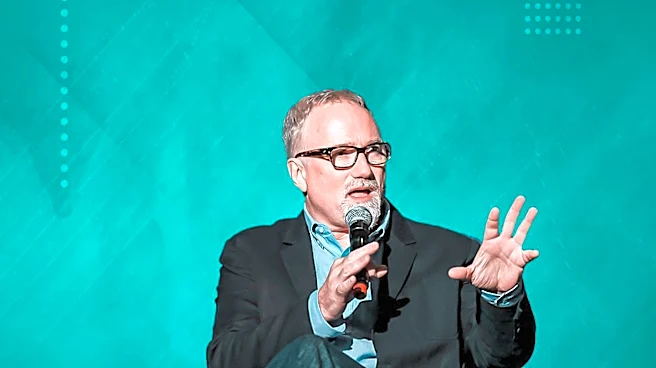
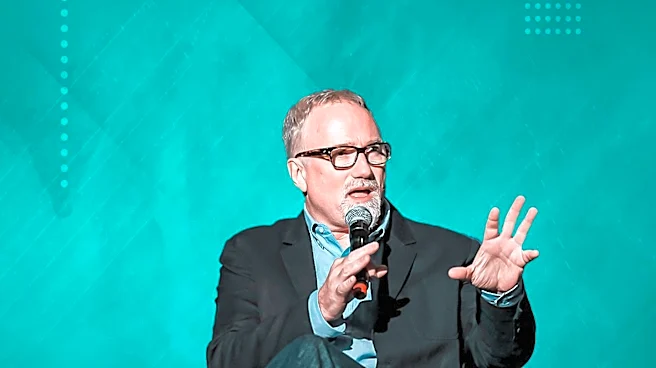
Director David Fincher has admitted to fabricating a story about Ben Affleck's refusal to wear a New York Yankees hat causing production delays for their 2014 film, 'Gone Girl.' Fincher confessed on the 'Happy Sad Confused' podcast that he 'made it up'
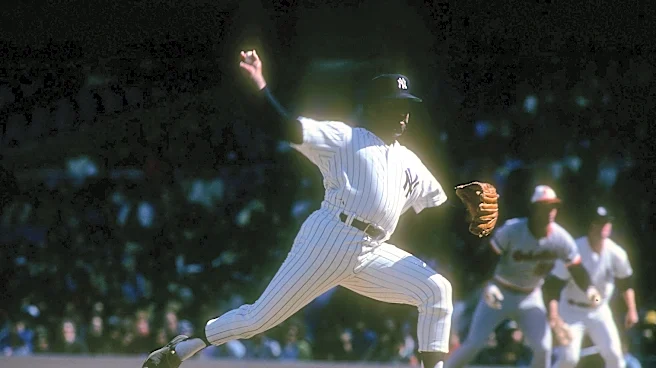
and intended to 'torture' Affleck with the false claim in the DVD commentary for the thriller. Affleck, a known Boston Red Sox fan, had previously stated that he and Fincher had a 'legitimate fight' over the Yankees hat, eventually compromising on a New York Mets hat. Affleck had expressed concern that wearing a Yankees hat would be a 'big distraction' due to his Red Sox allegiance. Fincher's admission comes after Affleck publicly called him a 'lying mother—ker' on the same podcast, asserting that Fincher has a 'very dark sense of humor' and enjoys provoking reactions.
Why It's Important?
This revelation highlights the often-unseen dynamics and playful rivalries that can exist between filmmakers and actors, even on high-profile projects. While seemingly a minor anecdote, it offers insight into the creative process and the personalities involved in Hollywood productions. For fans of 'Gone Girl' and the individuals involved, it clarifies a long-standing, albeit humorous, point of contention. It also underscores how commentary tracks and behind-the-scenes narratives, while offering insights, can sometimes contain embellished or fictionalized accounts for entertainment purposes. This incident could influence how audiences and critics perceive future 'behind-the-scenes' content, encouraging a more critical view of such narratives, especially when they involve personal anecdotes or conflicts.
What's Next?
While this specific incident is largely resolved with Fincher's admission, it may lead to further discussions or humorous exchanges between Fincher and Affleck in future interviews or public appearances. The anecdote could become a recurring topic when either individual promotes new projects, serving as a lighthearted example of their working relationship. It might also prompt other filmmakers or actors to share similar instances of on-set pranks or fabricated stories, potentially leading to a trend of more candid revelations about the lighter side of film production. For the public, it reinforces the idea that not all 'behind-the-scenes' stories are strictly factual, adding another layer to the consumption of entertainment media.
Beyond the Headlines
This story subtly touches upon the nature of storytelling itself, even within the context of discussing a film's production. Fincher, a director known for his meticulous and often dark narratives, applied a similar, albeit playful, narrative manipulation to his own commentary. It reflects how individuals in creative fields might extend their craft beyond the primary work, using interviews and supplementary materials as additional platforms for narrative construction. The incident also speaks to the strong regional sports loyalties in the U.S., where an actor's affiliation with one team can be so significant that it influences creative decisions in a major film, even if the 'delay' itself was fictional. This cultural aspect underscores the deep-seated identities tied to sports teams in American society.