


What's Happening?
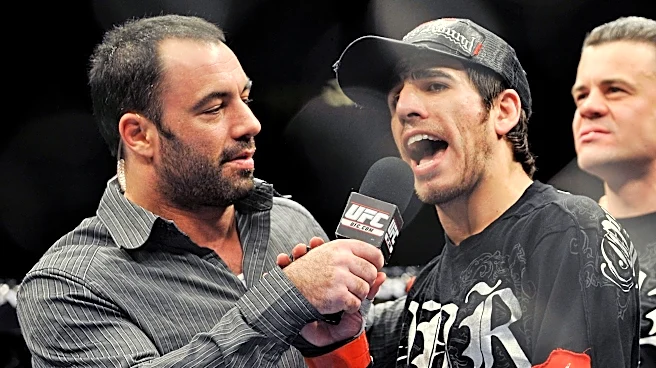
Joe Rogan has highlighted the significant hurdles elite jiu-jitsu grapplers encounter when moving into the Ultimate Fighting Championship (UFC). Rogan's observations come as several highly decorated grapplers have struggled to replicate their success
in the multi-faceted sport of MMA. Marcus Almeida, a 13-time jiu-jitsu world champion, is currently winless in three UFC appearances, with a record of 0-2-1. Similarly, Kron Gracie, son of legendary grappler Rickson Gracie, initially found success but then lost three consecutive fights, leading to his contract not being renewed. Alexandre Dantas, another multi-time jiu-jitsu champion, had a brief UFC career, suffering two knockout losses before returning to jiu-jitsu. These cases underscore Rogan's point that while jiu-jitsu provides an elite ground foundation, MMA demands proficiency in striking, wrestling, takedowns, and defense, often developed over a lifetime by other fighters.
Why It's Important?
The struggles of elite grapplers in the UFC, as discussed by Joe Rogan, highlight the unique demands of mixed martial arts compared to specialized combat sports. This situation is important for the sport's evolution, emphasizing that a singular mastery, even at a world-class level, does not guarantee success in the diverse skill set required for MMA. For aspiring fighters, it underscores the necessity of a comprehensive training regimen that integrates striking, wrestling, and defense alongside grappling. For promoters and fans, it reinforces the competitive integrity of the UFC, where a broad range of skills is paramount. The narrative also impacts how talent is scouted and developed, potentially leading to earlier and more integrated training for athletes looking to transition from other combat disciplines into MMA, ensuring they are well-rounded rather than specialized.
What's Next?
The ongoing discussion about the transition challenges for specialized athletes into MMA, particularly in the UFC, is likely to influence future fighter development and recruitment strategies. Organizations may increasingly prioritize fighters with a more diverse skill set from the outset, or invest more heavily in comprehensive training programs for those transitioning from single-discipline backgrounds. For current elite grapplers considering an MMA career, this insight from figures like Joe Rogan could prompt a more cautious and thorough preparation period, focusing on developing striking and wrestling alongside their grappling expertise. The performance of fighters like Marcus Almeida, who is still seeking his first UFC win, will continue to be closely watched as a case study for how successfully, or unsuccessfully, high-level grapplers adapt to the Octagon's demands.
Beyond the Headlines
The challenges faced by elite grapplers in the UFC extend beyond mere athletic performance, touching upon the psychological and strategic dimensions of combat sports. The expectation of immediate success, given their dominance in jiu-jitsu, can create immense pressure. Furthermore, the strategic adaptation required to integrate a grappling-first approach with effective striking and defense is a complex puzzle. This phenomenon also raises questions about the 'best' pathway to MMA success—whether it's through early, holistic training or by specializing and then diversifying. The narrative contributes to the broader understanding of what constitutes a 'complete' fighter in modern MMA, suggesting that mental fortitude and strategic versatility are as crucial as physical prowess and technical skill in any single discipline.