





What's Happening?
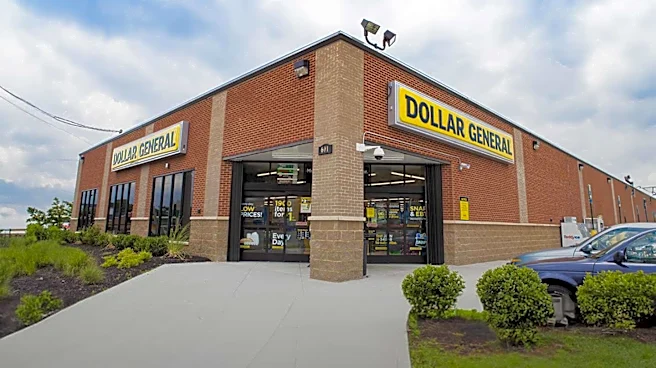
Instacart, a prominent grocery technology company, and Dollar General Corporation have announced a new partnership to provide same-day delivery of Dollar General's everyday essentials. This collaboration will allow customers to order a wide range of products,
including food, snacks, household items, and health and beauty products, through the Instacart App and website, with delivery possible in as fast as one hour. The initiative is set to begin with a pilot program in approximately 7,000 Dollar General and pOpshelf stores across six states in the coming weeks. Following this initial phase, there are plans to expand the service to roughly 20,000 stores in 48 states by the fall. Ryan Hamburger, Chief Commercial Officer at Instacart, highlighted Dollar General's extensive reach and commitment to affordability as key factors making them a valuable addition to the Instacart Marketplace. This partnership aims to enhance access to affordable goods for communities nationwide, offering the added convenience of same-day delivery.
Why It's Important?
This partnership is significant for several reasons, impacting both the retail and delivery sectors in the U.S. For Dollar General, it represents a substantial expansion of its customer reach and a modernization of its service offerings, allowing it to compete more effectively in the rapidly growing e-commerce and quick-delivery markets. By leveraging Instacart's established delivery network, Dollar General can cater to consumers who prioritize convenience and speed, potentially increasing sales and market share. For Instacart, integrating Dollar General's vast footprint, particularly in underserved or rural areas, strengthens its position as a leading delivery platform and broadens its product catalog. This move also addresses the increasing consumer demand for immediate gratification and convenience in shopping, a trend accelerated by recent global events. The collaboration could also set a precedent for other discount retailers to adopt similar delivery models, further transforming the retail landscape and consumer shopping habits across the country.
What's Next?
The immediate next step for this partnership involves the successful rollout of the pilot program in approximately 7,000 Dollar General and pOpshelf stores across six states. During this phase, both Instacart and Dollar General will likely monitor operational efficiency, customer satisfaction, and delivery logistics to refine the service. Following a successful pilot, the expansion to approximately 20,000 stores across 48 states is planned for the fall. This broader rollout will significantly increase the availability of same-day delivery for Dollar General products nationwide. We can anticipate increased marketing efforts from both companies to promote the new service to consumers. Furthermore, the success of this large-scale integration could influence other discount retailers to explore or expand their own same-day delivery options, potentially leading to a more competitive and convenience-driven retail environment in the U.S.
Beyond the Headlines
This collaboration between Instacart and Dollar General extends beyond mere convenience, touching upon deeper societal and economic implications. The expansion of same-day delivery to Dollar General's extensive network, which often includes rural and lower-income communities, could significantly improve access to essential goods for populations that may have limited transportation options or proximity to larger supermarkets. This enhanced accessibility can contribute to food security and overall well-being in these areas. Economically, the partnership could create new job opportunities for Instacart drivers, particularly in regions where employment options might be scarcer. It also highlights the ongoing shift in consumer behavior towards on-demand services, pushing traditional brick-and-mortar retailers to adapt or risk obsolescence. The success of this model could further entrench the 'convenience economy,' where speed and ease of access become paramount factors in consumer choice, potentially reshaping urban and rural retail landscapes alike.