


What's Happening?
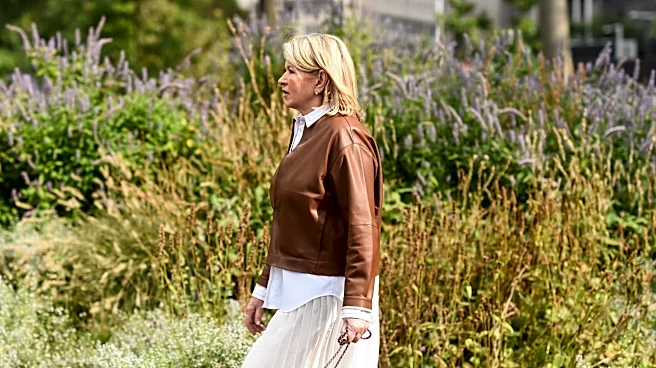
Martha Stewart issued an apology on the 'Today' show for her Halloween costume, which depicted her as a homeless person. The costume, worn on October 31, 2026, featured ripped jeans, a distressed shirt, and a cardboard sign that read 'I AM HUNGRY. HELP
ME!!' Following swift public backlash, Stewart appeared on the program on November 6 to address the controversy. During her appearance with co-anchor Craig Melvin, Stewart acknowledged the costume was a 'mistake' and 'insensitive.' She clarified that Melvin was not involved in the costume's creation and took full responsibility, stating she was 'stupid' for her choice. Stewart expressed a commitment to being more mindful of social issues moving forward. This incident is not her first time facing public scrutiny for comments or actions made on morning television, as noted by some commentators.
Why It's Important?
This incident highlights the increasing scrutiny public figures face regarding their portrayal of sensitive social issues, particularly homelessness. For Martha Stewart, a prominent lifestyle guru, the backlash underscores the importance of empathy and awareness in public representation. The swift negative reaction from the public and her subsequent apology demonstrate the power of social media and public opinion in holding celebrities accountable. This event also serves as a reminder for public figures to consider the broader implications of their actions and choices, especially when they touch upon vulnerable populations. The incident could influence how other public figures approach costume choices and public appearances, encouraging greater sensitivity to avoid similar controversies and potential damage to their personal brands.
What's Next?
Following her apology, Martha Stewart will likely face continued public observation regarding her future public statements and actions, particularly concerning social issues. The incident may prompt her to engage more actively in charitable causes related to homelessness or poverty to demonstrate her commitment to being more mindful. For other public figures, this event could serve as a cautionary tale, leading to more careful consideration of their public personas and choices, especially during widely celebrated events like Halloween. Media outlets and social commentators will likely monitor how Stewart navigates her public image in the coming months, assessing whether her apology translates into tangible changes in her public engagement and brand messaging. The broader conversation around appropriate representation of marginalized groups by celebrities is also likely to continue.
Beyond the Headlines
The controversy surrounding Martha Stewart's Halloween costume delves into deeper societal issues concerning class representation and empathy. The portrayal of homelessness as a costume trivializes a serious social problem, highlighting a disconnect between privileged public figures and the realities faced by vulnerable populations. This incident sparks a conversation about the ethics of using poverty as a theme for entertainment and the responsibility of those in the public eye to promote understanding rather than caricature. It also touches upon the broader cultural trend of 'cancel culture' and the immediate public demand for accountability from celebrities. The event underscores the ongoing challenge for public figures to remain authentic while navigating an increasingly sensitive and interconnected social landscape, where missteps can quickly lead to significant reputational damage and calls for greater social responsibility.