





What's Happening?
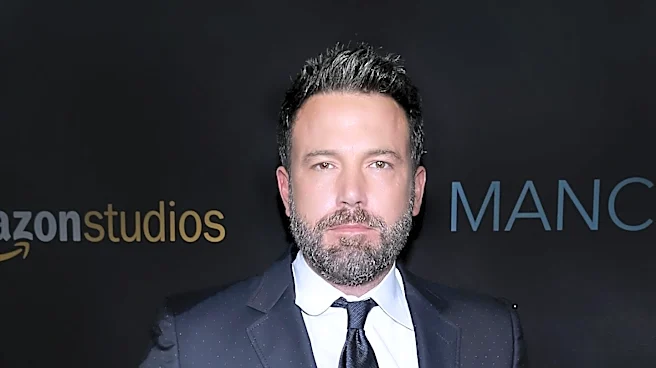
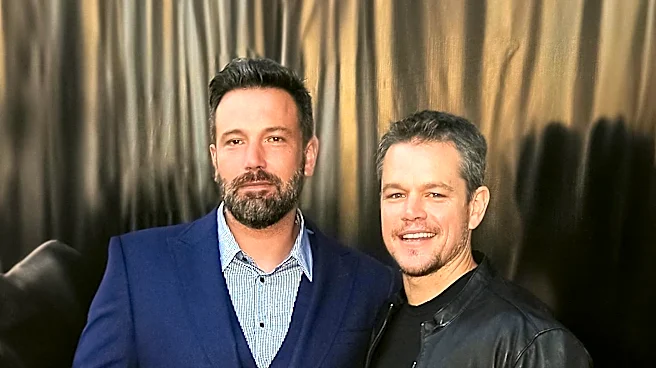
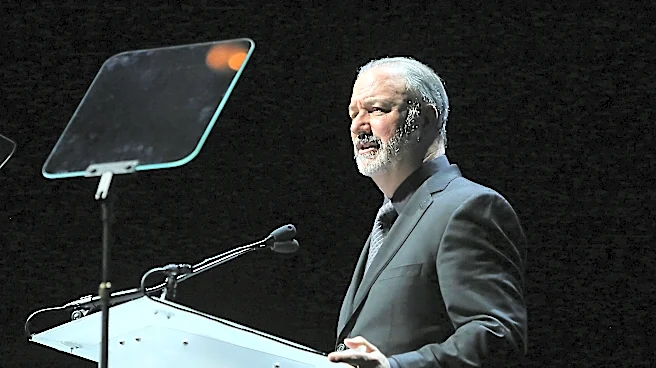
Filmmaker David Fincher has revealed that a widely circulated anecdote about a multi-day production shutdown on the set of 'Gone Girl' due to a dispute with actor Ben Affleck over a Yankees hat was largely fabricated. Fincher admitted on the 'Happy Sad
Confused' podcast that while Affleck did object to wearing a Yankees hat for a scene, the claim that it caused a prolonged shutdown was a playful exaggeration intended to 'torture' Affleck during a DVD commentary. Affleck, a known Boston Red Sox fan, was reportedly against wearing the rival team's logo, leading to a compromise where he wore a Mets hat instead. The actual disagreement lasted about 20 minutes, not multiple days, as Fincher had previously stated.
Why It's Important?
This revelation sheds light on the often-mythologized narratives surrounding film production and the creative liberties taken by filmmakers in recounting behind-the-scenes stories. It highlights how anecdotes, even if embellished, can become ingrained in public perception and contribute to a film's legacy. For the entertainment industry, it underscores the blend of reality and storytelling that can occur in promotional materials and commentaries, potentially influencing how audiences perceive the creative process and the personalities involved. The incident also demonstrates the strong rivalries and personal allegiances that can exist even among professionals, impacting seemingly minor artistic decisions. This kind of disclosure can foster a more critical view of 'insider' stories, encouraging audiences and critics to consider the narrative intent behind such accounts.
What's Next?
Fincher's admission is likely to be discussed within film circles and by fans of 'Gone Girl,' potentially leading to a re-evaluation of other behind-the-scenes stories from his or other directors' careers. While the immediate impact on Fincher's or Affleck's careers is likely minimal, it serves as a humorous footnote in the film's history. This type of disclosure might encourage more transparency from filmmakers about the creative process, or conversely, it could reinforce the idea that some level of myth-making is part of the industry's charm. The story will likely continue to be a talking point in discussions about film production and the personalities of those involved.
Beyond the Headlines
Beyond the immediate humor of Fincher's confession, this incident touches upon broader themes of narrative control and the construction of public image in the entertainment industry. Filmmakers, like any public figures, often craft stories about their work that serve to entertain, mystify, or even subtly shape their professional persona. The 'Yankees hat' story, even as a fabrication, became a memorable part of 'Gone Girl's' lore, demonstrating the power of a compelling narrative, regardless of its factual accuracy. It also subtly highlights the human element in creative collaborations, where personal preferences and rivalries can manifest in unexpected ways, even if exaggerated for effect. This event serves as a reminder that even in factual accounts, there can be layers of storytelling at play.