







What's Happening?
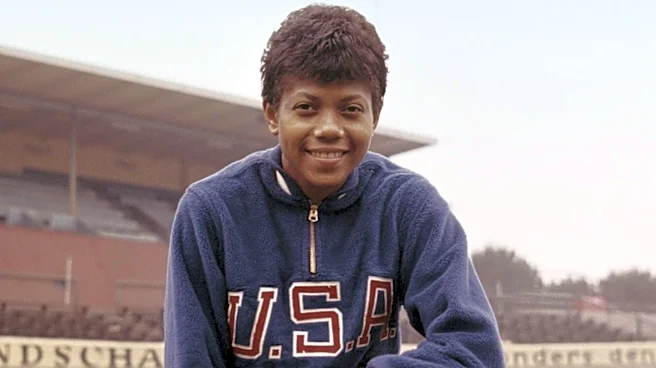
On September 2, 1960, Wilma Rudolph, a 20-year-old American athlete, began her historic run at the Rome Olympics by winning the women’s 100 meters. This victory marked the first of three gold medals she would secure at those Games. Rudolph's achievement
was particularly significant as she had overcome childhood polio and wore a leg brace as a girl before becoming a world-renowned sprinter. Her triumph on this day established her as one of the defining athletes of the Rome Olympics. She later added gold medals in the 200 meters and as part of the U.S. 4x100-meter relay team.
Why It's Important?
Wilma Rudolph's performance in Rome holds immense importance beyond her athletic achievements. Her story of overcoming childhood illness to become the 'world's fastest woman' served as a powerful inspiration, particularly during a time of significant social change in the United States. Her success challenged perceptions of what was possible for athletes, especially for women and African Americans. Rudolph's impact extended beyond the track, making her a symbol of perseverance and excellence. Her legacy continues to inspire athletes and individuals facing adversity, demonstrating the power of determination and resilience in achieving extraordinary goals.
What's Next?
While Wilma Rudolph's athletic career concluded after her historic Olympic performance, her legacy continues to be celebrated and studied. Her story remains a cornerstone in discussions about sports history, civil rights, and women's empowerment. Future generations of athletes and historians will continue to draw inspiration from her achievements and the context in which they occurred. Educational institutions and sports organizations will likely continue to highlight her contributions as a pioneering figure in American sports.
Beyond the Headlines
Wilma Rudolph's story delves into deeper implications concerning social progress and the breaking of barriers. Her success on the international stage provided a powerful counter-narrative to prevailing prejudices and limitations of her era. She became a role model, demonstrating that talent and determination could transcend societal obstacles. Her impact on the perception of female athletes and African American athletes was profound, contributing to broader movements for equality and recognition. Her life story is a testament to the transformative power of sports in shaping individual lives and influencing societal change.