



What's Happening?
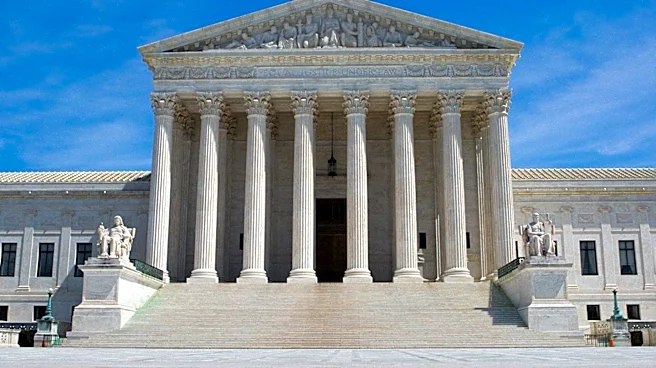
Goldman Sachs Group has secured a review by the U.S. Supreme Court regarding a bankruptcy arbitration dispute. The Supreme Court will examine the extent to which bankruptcy courts can prevent contractual arbitration under the U.S. Bankruptcy Code. This
case specifically questions how far bankruptcy judges can go in retaining creditor claims within Chapter 11 proceedings, rather than allowing them to be resolved in private arbitration forums. The outcome will clarify the enforceability of contract terms for financial institutions like Goldman Sachs when client situations involve bankruptcy. This review is a significant legal development for the firm, impacting its approach to managing complex creditor relationships and contractual agreements.
Why It's Important?
This Supreme Court review is crucial for Goldman Sachs and the broader financial industry, particularly for firms engaged in financing, trading, and risk management services. A ruling that limits bankruptcy courts' ability to block arbitration could strengthen the enforceability of contractual agreements, providing more predictability for financial institutions. This would allow firms to rely more heavily on contract-based dispute resolution tools, potentially simplifying capital usage and compliance costs. Conversely, a ruling that upholds or expands the power of bankruptcy courts to intervene could increase legal and regulatory risks for banks, making it harder to manage complex creditor relationships and potentially impacting their business models, especially for those that rely on balance sheet-intensive financing alongside fee income.
What's Next?
The Supreme Court's review will proceed, with a decision expected to clarify the legal landscape surrounding bankruptcy arbitration. The outcome will influence how Goldman Sachs and other financial institutions structure legal agreements and assess counterparty risk in their financing and derivatives operations. Depending on the ruling, there could be adjustments in how banks manage their capital and compliance, potentially leading to more standardized processes for resolving disputes in bankruptcy. Investors and analysts will closely monitor the decision, as it will provide insight into the regulatory environment for financial services and the potential for legal surprises in complex financial transactions.
Beyond the Headlines
Beyond the immediate legal implications, this case touches upon the fundamental balance between contractual freedom and the protective aims of bankruptcy law. The Supreme Court's decision could set a precedent for how disputes are resolved in financially distressed situations, potentially influencing the broader legal framework for commercial contracts. It highlights the ongoing tension between private contractual arrangements and public policy objectives, such as ensuring fair and orderly bankruptcy proceedings. The ruling could also impact the perceived risk associated with certain financial products and services, leading to shifts in how financial institutions price risk and structure their offerings to corporate clients, financial institutions, governments, and wealthy individuals.