




What's Happening?
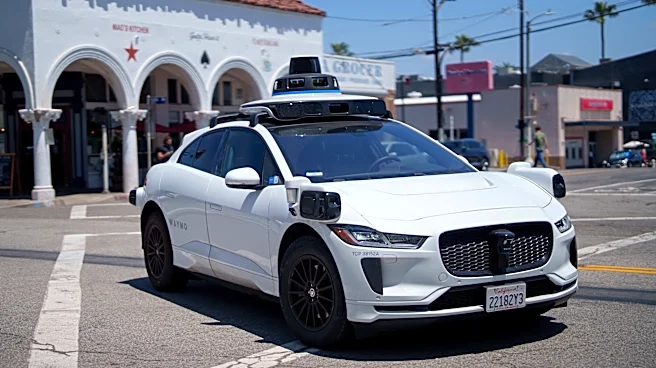
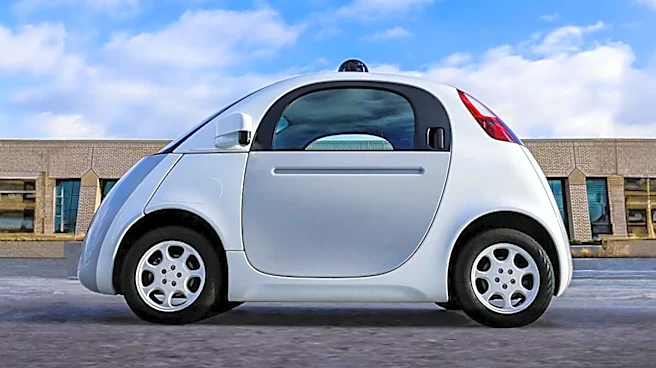
Alphabet CEO Sundar Pichai has informed employees that Waymo, the company's self-driving car unit, is expected to make a 'meaningful' financial contribution to Alphabet's results as early as 2027. This internal update suggests a potential turning point
for Alphabet's substantial investment in autonomous driving technology. Waymo has been actively expanding its services, launching in new cities such as Sacramento, Chicago, and Dallas, and increasing operations in several others, with further expansion planned before the end of 2026. The service is currently providing over 500,000 rides weekly, indicating growing consumer adoption of the autonomous taxi technology. While Waymo's financial results are not yet broken out in Alphabet's quarterly reports, they are currently part of the company's 'other bets' arm, which generated $382 million in revenue during the three-month period ending in June. An earlier fundraising presentation valued Waymo at $126 billion, reflecting its future potential rather than current revenue.
Why It's Important?
This projection from Alphabet's CEO signals a potential shift in the financial landscape for the tech giant, indicating that a long-term, high-investment project like Waymo could soon become a significant revenue stream. For investors, this could mean a reassessment of Alphabet's current market valuation, particularly concerning its self-driving business, which some may currently undervalue. The robotaxi market is projected to grow substantially, with Goldman Sachs estimating the U.S. market to reach $19 billion by 2030 and $48 billion by 2035, and the global industry potentially exceeding $400 billion by 2035. If Waymo captures a significant share of this growth, it could substantially impact Alphabet's overall financial performance and market position. However, it's important to note that Google's search business alone generated over $63 billion in revenue in the second quarter, and cloud computing added nearly $25 billion, suggesting that 'meaningful' for Waymo might still be a smaller fraction of Alphabet's total revenue in the near term.
What's Next?
The coming years will be crucial for Waymo to demonstrate its ability to transition from a high-investment venture to a significant profit contributor. Continued expansion of its services into more U.S. cities and increased consumer adoption will be key indicators of its progress. Investors will closely monitor Alphabet's financial reports for any signs of Waymo's growing contribution, even if its results remain consolidated within the 'other bets' category. The company's ability to scale its operations efficiently and navigate regulatory landscapes for autonomous vehicles will also be critical. While the market may currently be underestimating Waymo's near-term financial impact, its performance in 2027 and beyond will likely influence Alphabet's stock valuation and its strategic direction in the competitive autonomous driving sector.
Beyond the Headlines
The success of Waymo could have broader implications beyond Alphabet's financials, potentially accelerating the adoption of autonomous vehicle technology across the U.S. This could lead to significant transformations in urban transportation, logistics, and personal mobility. The widespread deployment of robotaxis could reduce traffic congestion, lower transportation costs, and enhance accessibility for various populations. However, it also raises questions about job displacement in traditional driving sectors, the need for robust regulatory frameworks for autonomous operations, and the ethical considerations surrounding AI decision-making in critical situations. The development and scaling of Waymo's technology could also influence public perception and trust in AI-driven systems, setting precedents for future technological integrations into daily life.