






What's Happening?
Actress Holland Taylor has publicly stated that CBS never provided her with a salary increase during her tenure on the hit sitcom 'Two and a Half Men,' despite her receiving four Emmy nominations for her role as Evelyn Harper. Taylor, 83, discussed her experience
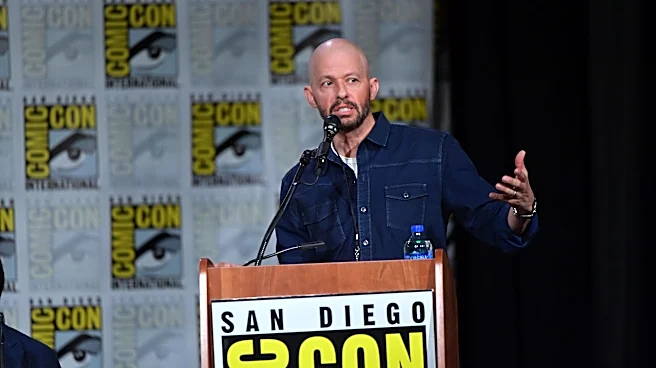
on the podcast 'Alchemy with Anthony Mason,' revealing that her pay remained consistent with what she earned on a series eight years prior. She expressed that while she enjoyed many aspects of the show, the network lacked 'courtesies' regarding her compensation. Taylor also noted that producers were 'astonished' when she chose not to renew her contract in 2009, at which point she was informed they could not offer her more money. She claims CBS was 'trying to protect themselves against giving me a raise of any significance,' even as her co-star Jon Cryer's salary reportedly quadrupled when his contract was up for renewal. The show aired on CBS from 2003 to 2015.
Why It's Important?
This revelation from Holland Taylor highlights ongoing issues of pay equity and transparency within the entertainment industry, particularly concerning veteran actors. Her experience underscores a potential disparity in how networks value and compensate talent, even when actors achieve critical acclaim, as evidenced by her multiple Emmy nominations. The alleged refusal to grant a raise, while a male co-star's salary significantly increased, could fuel further discussions about gender pay gaps and fairness in contract negotiations in Hollywood. For actors, it emphasizes the importance of contract terms and the potential for long-term financial stagnation if initial agreements are not revisited or if networks are unwilling to negotiate. This situation could encourage other actors to speak out about their own experiences, potentially leading to greater scrutiny of network compensation practices and calls for more equitable treatment across the board.
What's Next?
Holland Taylor's public statements may prompt further dialogue within the entertainment industry regarding actor compensation and contract negotiations. While immediate policy changes are unlikely, her story could contribute to a broader conversation among actors, agents, and unions about advocating for fairer pay structures and more transparent salary practices. Other actors who have experienced similar situations might feel empowered to share their stories, potentially increasing pressure on studios and networks to review their compensation policies. This could lead to more rigorous contract reviews for actors, particularly those in supporting roles who may not have the same leverage as lead stars. The discussion might also influence future collective bargaining agreements between unions like SAG-AFTRA and major studios, pushing for clauses that ensure more regular and equitable salary adjustments for long-running series.
Beyond the Headlines
Taylor's account delves into the less visible aspects of long-term employment in the entertainment industry, where initial contract terms can dictate an actor's earnings for years, regardless of their growing contribution or critical success. It raises ethical questions about the responsibility of networks to fairly compensate talent, especially when a show becomes a significant financial success. The disparity in salary adjustments between Taylor and Jon Cryer, as alleged, also touches upon the subtle ways gender and role hierarchy can influence financial outcomes in Hollywood. This situation could reflect a broader industry pattern where supporting actors, particularly women, may face greater resistance in securing significant pay increases compared to their male counterparts or lead actors. It highlights the persistent challenges in achieving true equity in an industry often criticized for its opaque compensation practices.