




What's Happening?
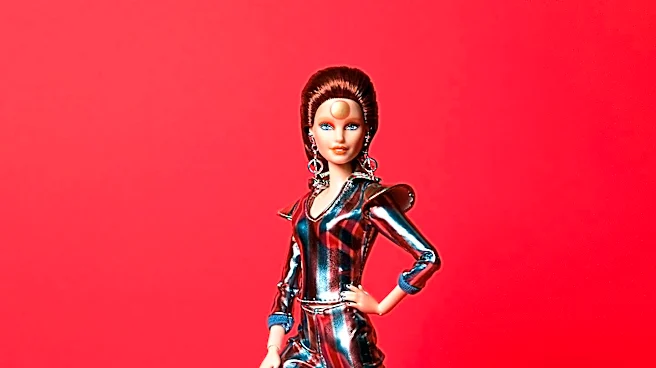
Ambush designer Yoon Ahn has collaborated with Mattel to create a unique Barbie doll, dubbed 'Prototype 001.' This new iteration of Barbie departs significantly from traditional designs, presenting a 'robo-babe' aesthetic. Ahn, who grew up more interested
in Legos and deconstructing her Barbies than playing with them conventionally, aimed to leave a distinct mark that reflects Ambush's world-building ethos rather than a literal fashion interpretation. The doll features a blonde hime haircut, a pink headset, silver body armor, and is accompanied by a cyborg cat. This design draws inspiration from anime TV shows, sci-fi movies, and the work of contemporary artist Mariko Mori, who explores themes of technology, spirituality, and transcendence. Ahn's creation is noted as potentially the first humanoid Barbie in Mattel's history, pushing the boundaries of the doll's traditional image.
Why It's Important?
This collaboration signifies a notable shift in how iconic brands like Barbie are engaging with contemporary culture and design. By embracing a 'robo-babe' aesthetic, Mattel is tapping into themes of futurism, technology, and evolving perceptions of identity, moving beyond traditional gender roles and beauty standards often associated with Barbie. This move could broaden Barbie's appeal to a new generation of consumers interested in sci-fi, anime, and avant-garde fashion, while also reflecting broader societal conversations about human-robot interaction and the future of humanity. For the fashion industry, it highlights the increasing influence of designers who challenge conventional norms and integrate diverse cultural references into their work. The project also underscores the growing trend of brands leveraging collaborations to refresh their image and stay relevant in a rapidly changing market.
What's Next?
The release of Prototype 001 Barbie could pave the way for more experimental and technologically-inspired collaborations for Mattel, potentially influencing future toy designs and brand partnerships. This innovative approach might encourage other toy manufacturers to explore similar themes, leading to a diversification of products in the market. The reception of this 'humanoid Barbie' will likely inform Mattel's strategy for future limited-edition releases and its overall brand evolution. It could also spark further discussions within the fashion and design communities about the intersection of technology, art, and consumer products. Additionally, the success of this collaboration might inspire other designers to reinterpret classic figures through a futuristic lens, fostering a new wave of creative projects.
Beyond the Headlines
The 'robo-babe' Barbie delves into deeper implications concerning the evolving definition of femininity and identity in a technologically advanced world. By presenting a Barbie that is part-human, part-robot, the collaboration subtly questions traditional notions of what it means to be 'human' and 'humanoid.' This reflects a growing cultural fascination with artificial intelligence and robotics, and how these advancements might reshape our understanding of self and society. The design's inspiration from Mariko Mori's work, which explores spirituality and transcendence through technology, adds a philosophical layer, suggesting that technology can be a pathway to new forms of existence and expression rather than solely a tool. This Barbie could serve as a cultural artifact, prompting conversations about the future of identity, the role of technology in shaping our perceptions, and the potential for optimism in futurism.