




What's Happening?
JPMorgan's Asia Pacific Equity Research team has increased its price target for Unitree Robotics to RMB 1,060, indicating a potential upside of approximately 50%. Concurrently, the bank upgraded UBTECH Robotics' rating from 'Neutral' to 'Overweight,'
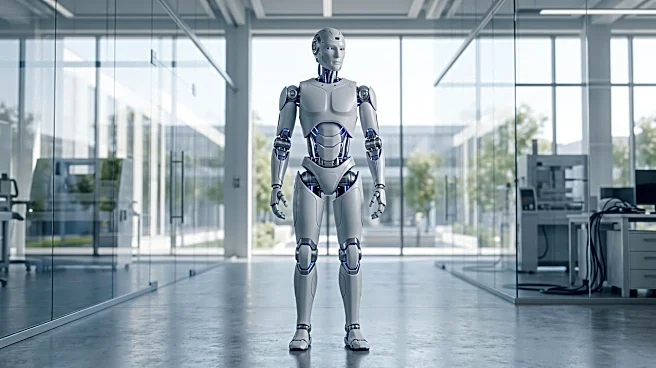
setting a new target price of HKD 77, suggesting a potential upside of about 28%. This re-evaluation comes as the embodied AI and humanoid robot sector transitions from conceptual demonstrations to commercial deployment, with a heightened focus on real-world data collection and customer return on investment (ROI). The report, released on November 24, 2026, highlights breakthroughs in large models, accelerated mass production by companies like Tesla, and robust industrial policy rollouts in China as key drivers for this shift. The industry's competitive landscape is now centered on bridging the 'Sim-to-Real' gap and converting technological advancements into replicable commercial contracts, moving beyond impressive demo videos.
Why It's Important?
This shift in analyst ratings and industry focus signifies a critical maturation point for the humanoid robot sector. The emphasis on commercial deployment, data flywheels, and ROI indicates that the market is moving past speculative interest towards tangible economic value. For U.S. industries, particularly manufacturing, logistics, and potentially service sectors, the accelerated development and deployment of humanoid robots could lead to significant operational efficiencies, cost reductions, and address labor shortages. Companies that successfully integrate these advanced robotics will gain a competitive edge. The increased investment and policy support, especially from China, could also spur innovation and competition globally, potentially influencing U.S. robotics companies to accelerate their own commercialization strategies. Investors are now looking for companies that can demonstrate practical applications and scalable solutions, rather than just technological prowess, which will reshape investment flows in the AI and robotics space.
What's Next?
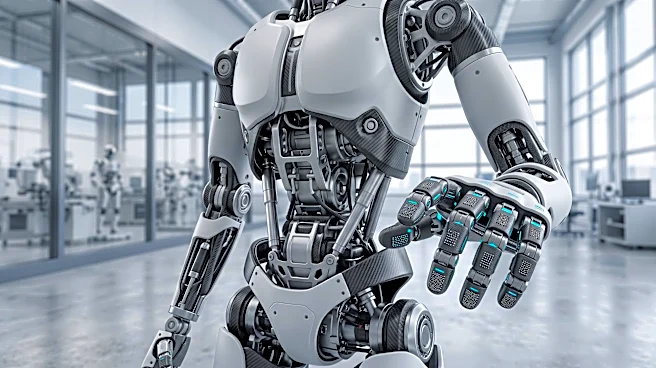
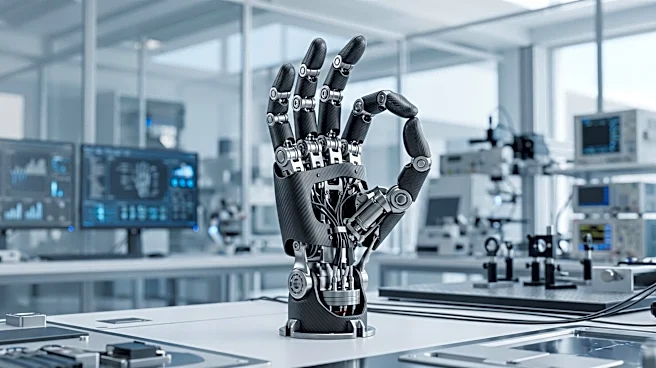
The humanoid robot sector is expected to undergo significant reshuffling and consolidation over the next two to three years, as companies vie to establish viable commercial contracts and data collection mechanisms. Tesla plans to internally deploy 10,000 to 20,000 Optimus robots for self-play and task refinement before external sales commence in late 2027, with projections of ramping up to 100,000 to 200,000 units shipped in 2027. In China, government initiatives aim to cultivate 10 leading humanoid robot OEMs, achieve an annual capacity of 200,000 units, and accumulate over 1 million hours of high-quality data by 2028. These developments suggest a rapid acceleration in the adoption and integration of humanoid robots into various industries, with a strong focus on standardized and safe workstations initially. The industry will also be watching for further breakthroughs in tactile sensing and the durability of dexterous hands, which remain key challenges.
Beyond the Headlines
The transition from conceptual demonstrations to commercial deployment in the humanoid robot sector carries profound implications beyond immediate market valuations. Ethically, the widespread deployment of humanoid robots in workplaces raises questions about job displacement, the future of labor, and the need for reskilling initiatives. Legally, the development of industry standards for intelligent grading and dexterous hands, as seen in China, will likely influence global regulatory frameworks concerning robot safety, liability, and interaction with humans. Culturally, the increasing presence of humanoid robots in industrial and potentially service settings could shift societal perceptions of automation and human-machine collaboration. The 'training data pyramid,' with its reliance on teleoperation, human demonstrations, and simulated data, also highlights the critical importance of data privacy and security in the development of advanced AI systems. This evolution signifies a long-term shift towards embodied AI, where physical robots learn and adapt in real-world environments, potentially transforming numerous aspects of daily life and industry.