





What's Happening?
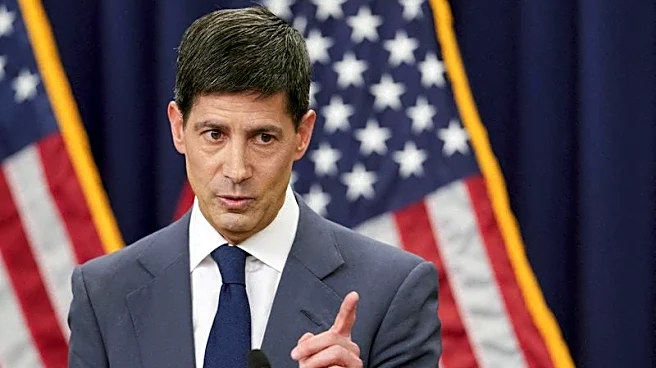
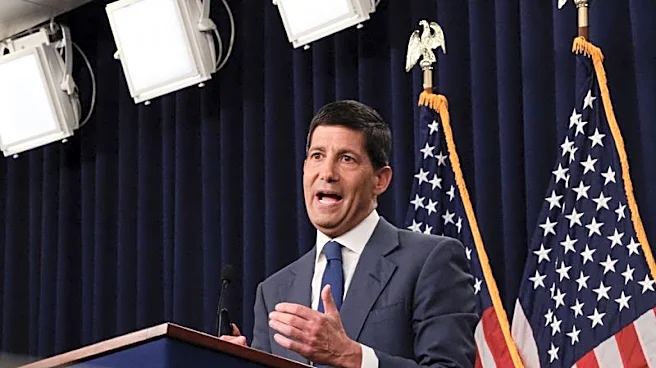
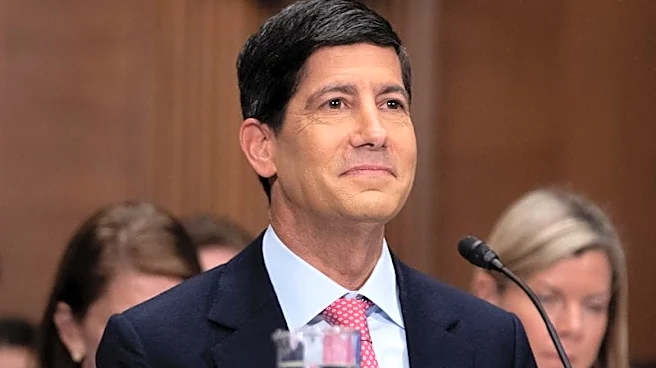
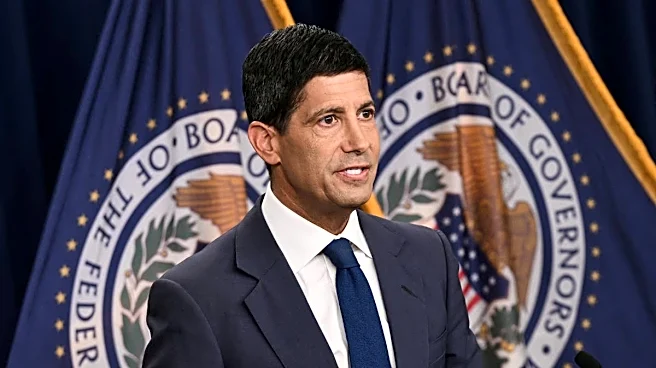
The Federal Reserve, under the leadership of Chairman Kevin Warsh, has introduced a new communication strategy that omits traditional forward guidance and detailed voting information. This change, first observed in June, was reiterated in the latest Federal Open
Market Committee (FOMC) statement. The new approach involves shorter, simpler statements that focus on presenting facts without projecting future policy directions. This shift has left investors and economists uncertain about the Fed's future actions, as they previously relied on nuanced language changes in statements to gauge policy shifts. Warsh's strategy aims to adapt communication to current economic conditions, but it has increased market volatility as stakeholders adjust to the lack of guidance.
Why It's Important?
The Federal Reserve's communication strategy is crucial for financial markets, as it influences investor expectations and economic forecasts. By removing forward guidance, the Fed under Warsh is creating a more unpredictable environment, which could lead to increased market volatility. This approach may challenge investors and economists who rely on Fed signals to make informed decisions. The change also reflects a broader shift in how central banks communicate, potentially influencing global monetary policy practices. The impact of this strategy will be closely watched by financial markets, as it could affect interest rates, inflation expectations, and economic growth.
What's Next?
As the Federal Reserve continues with its new communication strategy, market participants will need to adapt to the increased uncertainty. Investors may turn to alternative methods, such as artificial intelligence tools, to interpret Fed statements and predict policy changes. The Fed's future statements will be scrutinized for any subtle hints of policy direction, and the effectiveness of Warsh's approach will be evaluated based on market reactions and economic outcomes. The Fed's ability to maintain credibility and manage market expectations without traditional guidance will be a key focus for stakeholders.