

What's Happening?
HBO's television series 'The Last of Us,' an adaptation of the popular 2013 video game, has received significant critical acclaim since its premiere on January 15. The show, which concluded its first season on March 12, is set in a post-apocalyptic United
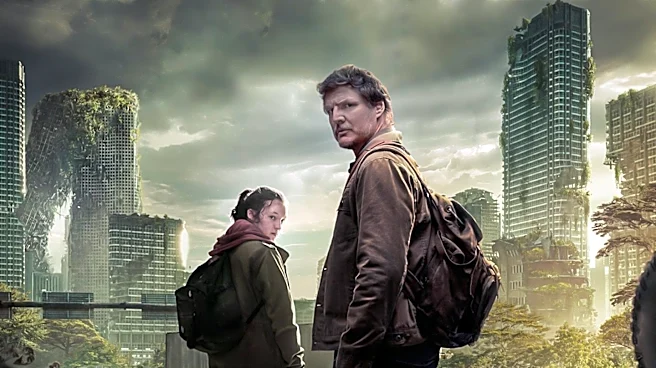
States in 2023, two decades after a Cordyceps fungal mutation triggered a global pandemic, transforming infected individuals into zombie-like creatures. The narrative follows Joel Miller, a smuggler, tasked with escorting 14-year-old Ellie across the country to the Fireflies, a revolutionary group opposing martial law. The series is praised for its nonlinear timeline, incorporating flashbacks that extend to the 1960s and even Indonesia, enriching the backstory and immersing the audience. Its pilot episode attracted 4.7 million viewers in the United States, marking it as HBO's second-highest streaming debut since 2010. The show's success is attributed to its blend of action, slice-of-life elements, and themes of found family and hope, resonating with both fans of the original game and new viewers.
Why It's Important?
The success of 'The Last of Us' is significant for the entertainment industry, particularly in the realm of video game adaptations. Historically, many video game-to-screen adaptations have struggled to capture the essence or quality of their source material, often disappointing fans and critics alike. 'The Last of Us' breaks this trend, demonstrating that faithful yet creatively enhanced adaptations can achieve widespread critical and commercial success. This could encourage more investment in high-quality video game adaptations, potentially opening new avenues for storytelling and revenue in Hollywood. The show's ability to attract a large audience, as evidenced by its strong viewership numbers, highlights the demand for well-produced, character-driven narratives within the post-apocalyptic genre. Furthermore, its exploration of themes like found family and hope in dire circumstances provides a compelling human element that transcends typical zombie narratives, offering a model for future productions aiming for deeper emotional resonance.
What's Next?
'The Last of Us' has been renewed for a second season, indicating continued investment in the franchise by HBO. Fans are eagerly anticipating the next installment, which is expected to further explore the complex relationship between Joel and Ellie and delve deeper into the post-apocalyptic world. The show's creators, including Neil Druckmann, who also wrote and directed the original game, and co-writer Craig Mazin, are likely to continue their approach of balancing fidelity to the source material with creative liberties that enhance the viewer's experience. The success of the first season sets a high bar for future episodes, with expectations for continued strong performances from lead actors Pedro Pascal and Bella Ramsey, as well as compelling storytelling. The series' ongoing popularity could also influence other streaming platforms and studios to greenlight similar high-budget, critically ambitious adaptations of popular intellectual properties.
Beyond the Headlines
Beyond its immediate success, 'The Last of Us' contributes to a broader cultural conversation about the nature of humanity and survival in extreme circumstances. The show's depiction of a world ravaged by a fungal pandemic, while fictional, touches upon contemporary anxieties about global health crises and societal collapse. Its emphasis on the emotional and psychological toll of survival, rather than just the physical threats, offers a nuanced perspective on resilience and the human capacity for connection amidst despair. The series also subtly explores ethical dilemmas faced by characters forced to make difficult choices for survival, prompting viewers to consider the boundaries of morality in a lawless world. This depth allows the show to transcend its genre, becoming a commentary on the enduring power of human relationships and the search for meaning in an unrecognizable future, potentially influencing how future post-apocalyptic narratives are conceived and executed.