






What's Happening?
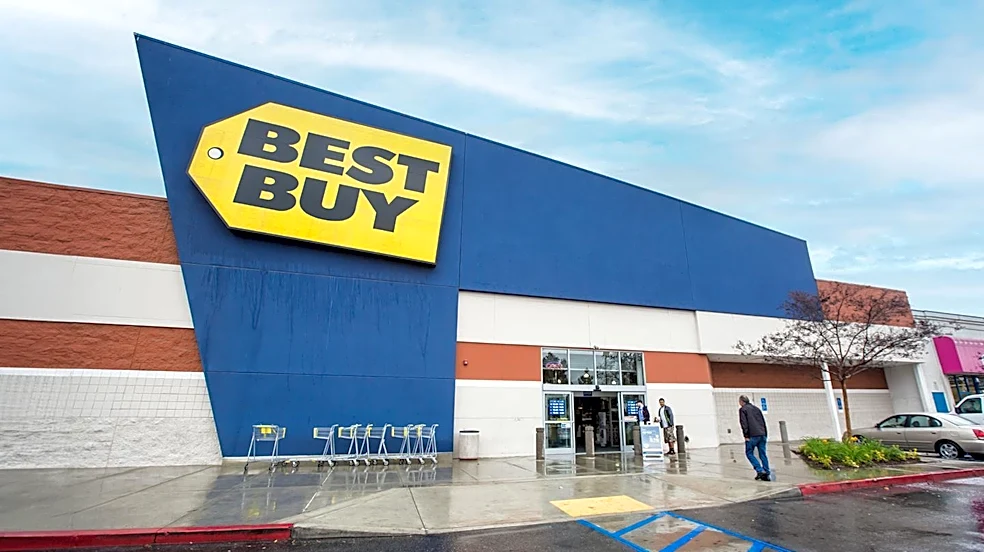
Best Buy has undergone a significant strategic transformation, moving away from solely competing on price to focusing on expertise, customer service, and leveraging its physical stores as key assets. In 2012, the company faced severe challenges, with
its stock price plummeting and analysts predicting its demise due to 'showrooming,' where customers would browse in-store and then purchase items cheaper online, primarily from Amazon. Under the leadership of Hubert Joly, Best Buy implemented a permanent price-matching policy to stop customer attrition. More importantly, it shifted its offensive strategy to selling solutions rather than just products. This involved turning physical stores into fulfillment centers, tech support hubs, and showcases for premium electronics. The company also invested heavily in its 'Blue Shirts' employees, enhancing their knowledge and advisory roles, and repositioning its Geek Squad from a reactive cost center to a proactive, in-home advisory and installation service. This multi-faceted approach aimed to differentiate Best Buy by offering what online-only retailers could not: human connection, expert advice, and immediate gratification.
Why It's Important?
This strategic pivot by Best Buy holds significant importance for the U.S. retail landscape, demonstrating a viable model for traditional brick-and-mortar stores to compete in an e-commerce-dominated market. By refusing to abandon physical stores and instead re-architecting them into multi-modal hubs—localized micro-fulfillment nodes, interactive OEM showrooms, and experiential client onboarding centers—Best Buy transformed a perceived liability into a competitive advantage. This approach impacts the broader retail industry by highlighting the value of in-person customer experience and specialized services. It shows that investing in human capital and expertise can create a 'moat' against price-driven online competitors. For consumers, this means access to knowledgeable staff, immediate product availability through in-store pickup, and comprehensive support services, potentially enhancing their overall purchasing experience for complex electronics. Businesses, particularly those in consumer electronics, gain a partner in Best Buy that actively promotes their brands through vendor shop-in-shops and provides a platform for premium product showcasing, which online channels often struggle to replicate.
What's Next?
Best Buy's ongoing strategy, 'Building the New Blue,' under CEO Corie Barry, indicates a continued evolution beyond traditional electronics retail. The company is expanding into health technology, outdoor living, and entertainment, aiming to become a hub for 'connected living.' This suggests a future where Best Buy offers a broader range of services and products integrated into customers' daily lives, moving further away from being just a gadget store. The company is also focusing on membership programs like 'Totaltech' (now My Best Buy Plus and Total) to create recurring revenue and foster customer loyalty, ensuring an ongoing relationship rather than one-time transactions. Furthermore, Best Buy is scaling its retail media ('Best Buy Ads') and marketplace businesses, which carry higher margins and help offset the thin margins on product sales. These initiatives indicate a future where Best Buy will likely continue to diversify its offerings, strengthen its service-based revenue streams, and leverage its physical and digital assets to adapt to changing consumer demands and market conditions, including post-pandemic demand lulls in consumer electronics.
Beyond the Headlines
Best Buy's turnaround offers deeper insights into the evolving nature of retail and consumer behavior. It challenges the notion that physical retail is obsolete in the digital age, demonstrating that a well-executed omnichannel strategy can thrive. The emphasis on 'human magic'—investing in knowledgeable employees and expert advice—underscores a fundamental human need for guidance and trust, especially when purchasing complex or high-value items. This highlights an ethical dimension: valuing and empowering employees can be a strategic advantage, not just a cost. Culturally, it suggests a shift in consumer expectations, where convenience and competitive pricing are baseline, but personalized service and expertise are increasingly valued differentiators. The model also touches on the long-term shift towards a 'service economy,' where the sale of a product is often a gateway to higher-margin, ongoing service relationships. This could trigger broader industry changes, encouraging other retailers to re-evaluate their physical footprints and invest in specialized services and employee training to remain relevant.