




What's Happening?
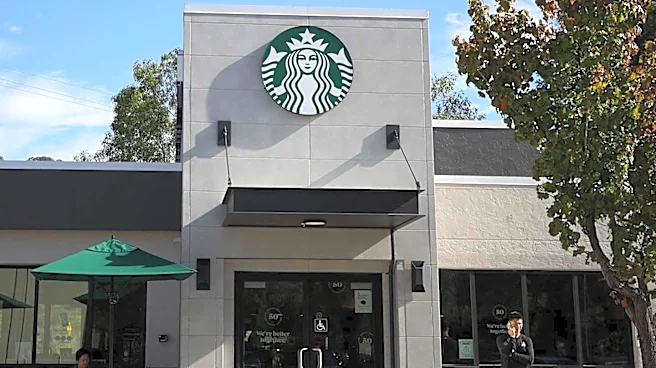
A Starbucks location on Longley and McCarran in Reno has become the seventh store in Nevada to unionize, with baristas voting unanimously to join Starbucks Workers United on Wednesday. Amara Kauffman, a shift supervisor at the Starbucks, stated that the decision
to unionize was driven by chronic understaffing, management inconsistencies, and frequent product launches that have negatively impacted the work environment. Workers are now demanding that Starbucks address issues such as better hours, higher take-home pay, and the resolution of what they claim are hundreds of unfair labor practices. Starbucks, in response, stated its commitment to bargaining in good faith and highlighted its competitive pay and industry-leading benefits for eligible hourly partners, while noting that updates implemented at non-union stores are subject to bargaining at unionized locations.
Why It's Important?
The unionization of another Starbucks store in Reno is a significant development in the ongoing national labor movement within the company. It reflects a growing trend of workers seeking collective bargaining power to address concerns over working conditions, wages, and benefits. For the employees, unionization provides a formal mechanism to negotiate with management, potentially leading to improved terms of employment and a stronger voice in workplace decisions. For Starbucks, this expansion of unionized stores presents challenges to its traditional corporate culture and may influence its labor relations strategies nationwide. The outcome of these negotiations could set precedents for other Starbucks locations and impact the broader retail and service industries, particularly regarding employee rights and corporate responsibilities.
What's Next?
Following the unanimous vote, Starbucks Workers United will begin the process of negotiating a contract with Starbucks management for the Reno store. These negotiations are expected to focus on the workers' demands for better hours, higher pay, and the resolution of alleged unfair labor practices. The process could be lengthy and may involve further discussions and potential disputes. Starbucks has indicated its willingness to bargain in good faith, but the specifics of any agreement will be crucial. The success or challenges faced by this newly unionized store could influence other Starbucks locations in Nevada and across the U.S. that are considering or undergoing unionization efforts. The broader labor movement will closely watch these developments as a barometer of worker power in the current economic climate.
Beyond the Headlines
The unionization of a Starbucks store in Reno is more than just a local labor dispute; it is part of a larger national narrative about worker empowerment and the evolving relationship between employees and large corporations. This movement challenges the traditional corporate model, where decisions are often made top-down, by advocating for a more democratic workplace where employee voices are formally recognized. The issues cited by the baristas—understaffing, management inconsistencies, and product launches—point to the pressures faced by frontline service workers in a fast-paced industry. This trend could have long-term implications for labor laws, corporate governance, and the future of work in the U.S., potentially inspiring workers in other sectors to organize. It also highlights the ethical considerations for companies regarding employee well-being and fair labor practices, especially in a competitive job market.