







What's Happening?
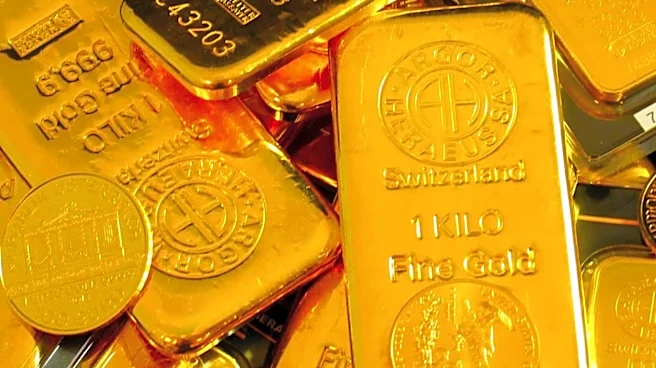
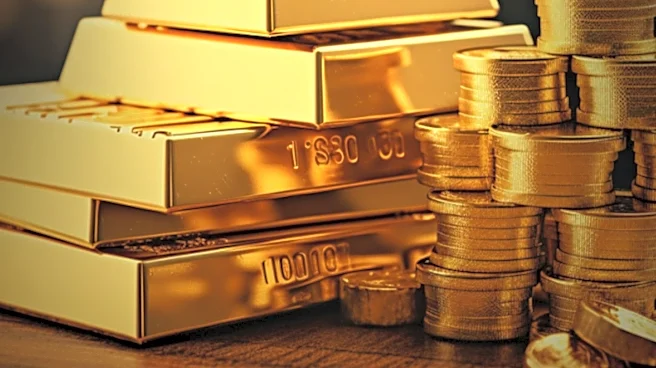
Gold prices have surged significantly, reaching over $4,300 per ounce, following weaker-than-expected U.S. employment data. The U.S. Department of Labor reported a decline in job creation, with the economy losing 23,000 jobs in July, contrary to expectations
of an 85,000 job increase. This has reduced the likelihood of the Federal Reserve raising interest rates, contributing to the rise in gold prices. The yield on 10-year U.S. Treasury bonds has increased, yet gold prices have remained resilient, maintaining above the $4,000 per ounce psychological threshold.
Why It's Important?
The rise in gold prices reflects investor sentiment towards economic uncertainty and the potential for changes in Federal Reserve policy. As interest rates are less likely to increase, the opportunity cost of holding non-yielding assets like gold decreases, making it more attractive. This trend indicates a shift in market expectations regarding monetary policy, which could have broader implications for financial markets and investment strategies. The resilience of gold prices amidst rising yields suggests a strong demand for safe-haven assets in uncertain economic times.
What's Next?
Market analysts predict continued upward momentum for gold prices, driven by both fundamental factors and market sentiment. The upcoming release of inflation data could influence this trend, as it may affect Federal Reserve policy decisions. Investors and analysts will closely monitor these developments to gauge the future direction of gold prices and interest rates. The potential for further economic uncertainty could lead to sustained demand for gold as a safe-haven asset.