







What's Happening?
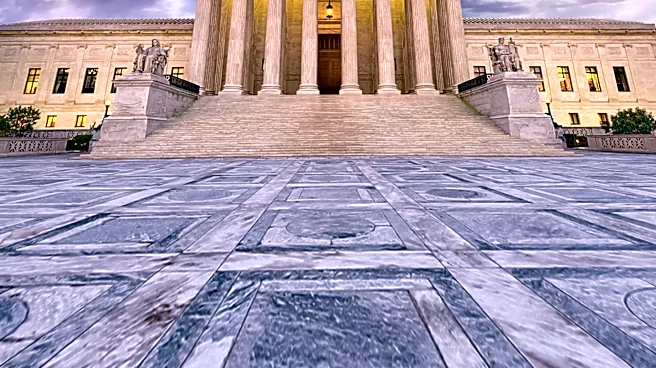
The U.S. Supreme Court has issued a ruling in the case of 'Hikma v. Amarin,' which clarifies the requirements for proving inducement in patent infringement cases. The court determined that inducement requires clear and active encouragement, rather than
vague or passive statements. This decision makes it more challenging for patent holders to prove infringement, particularly in cases involving products with both patented and unpatented uses. The ruling is expected to have broad implications across various industries, affecting how companies approach patent enforcement strategies.
Why It's Important?
The Supreme Court's decision is a pivotal moment for patent law, as it sets a higher bar for proving inducement in infringement cases. This ruling could lead to a shift in how companies protect their intellectual property, potentially making it more difficult for patent holders to enforce their rights. Industries that rely heavily on patents, such as pharmaceuticals and technology, may need to reassess their legal strategies in light of this decision. The ruling also emphasizes the importance of clear and direct communication in establishing inducement, which could influence future patent litigation.