








What's Happening?
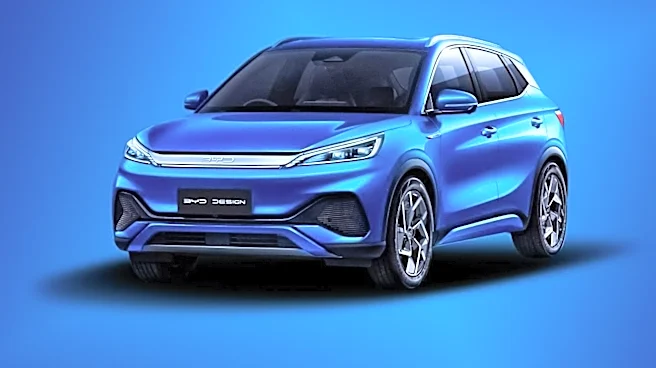
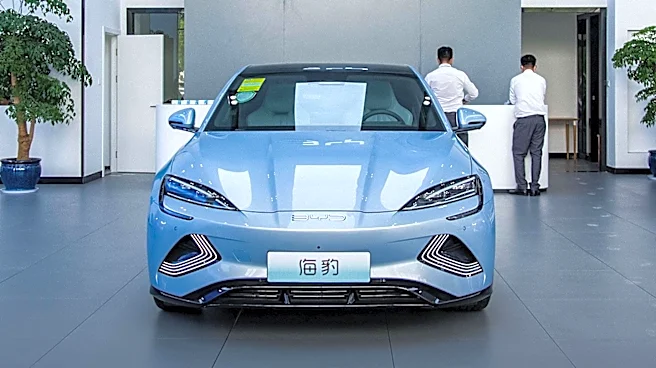
BYD, a leading Chinese new energy vehicle (NEV) manufacturer, has reached a significant milestone at its Brazil plant with the production of its 100,000th NEV. The plant, located in Camacari, Bahia, began operations on July 1, 2025, and has since expanded
its workforce to over 5,500 employees. The milestone vehicle, a BYD Seagull, rolled off the production line on July 16, 2026. This achievement is part of BYD's broader strategy to localize production in South America and increase its market presence. The company has invested 5.5 billion reais ($1 billion) in the plant, which has an annual production capacity of 150,000 vehicles in its first phase. BYD aims to become Brazil's best-selling auto brand by 2030 and plans to increase the local content of its vehicles to 50% by 2027.
Why It's Important?
BYD's expansion in Brazil is a strategic move to strengthen its position in the global NEV market, particularly as competition intensifies in its home market of China. By localizing production, BYD not only reduces costs but also aligns with Brazil's economic goals of job creation and industrial growth. The plant's expansion supports Brazil's transition to greener transportation, contributing to environmental sustainability. Additionally, BYD's efforts to increase local content in its vehicles could enhance the country's automotive supply chain, fostering economic development. This move also positions BYD to capture a larger share of the Latin American market, which is crucial for its global sales targets.
What's Next?
BYD plans to continue expanding its production capacity and improving its local supply chain in Brazil. The company aims to increase the localization rate of its vehicles to 50% by early 2027, which will involve further investment in local manufacturing capabilities. As BYD strives to become Brazil's top auto brand by 2030, it will likely focus on enhancing its product offerings and expanding its market reach. The company's success in Brazil could serve as a model for its expansion into other international markets, as it seeks to achieve its revised target of selling 1.5 million vehicles overseas by 2026.