




What's Happening?
Japan and Vietnam have agreed to enhance cooperation in critical minerals, aiming to leverage Vietnam's substantial reserves. This agreement was formalized during Vietnamese President To Lam's visit to Tokyo, where both nations issued a 'joint vision
statement' committing to explore and implement cooperation projects in this sector. Analysts suggest this move is intended to safeguard Japan from potential disruptions in critical mineral shipments from China, which is currently the world's leading supplier of rare earth metals. Japanese media has characterized this announcement as an acceleration of joint efforts in critical minerals, which are vital inputs for Japan's manufacturing industry, particularly for consumer electronics, electric vehicles, and aerospace equipment. While the partnership seeks to diversify supply chains, some analysts believe that completely replacing China as a source for these minerals would be 'unrealistic.'
Why It's Important?
This collaboration is strategically significant for Japan, a major manufacturing nation heavily dependent on imported critical minerals. By partnering with Vietnam, Japan aims to bolster its economic security and reduce its vulnerability to supply chain disruptions, particularly from China. The global demand for critical minerals, essential for advanced technologies and green energy initiatives, is rapidly increasing. Securing diverse and stable sources for these materials is crucial for maintaining industrial competitiveness and national security. For Vietnam, this partnership offers an opportunity to develop its mining sector and strengthen its economic ties with a technologically advanced nation like Japan. The move also reflects a broader trend among nations to de-risk their supply chains and lessen reliance on single-country suppliers for vital resources, especially in the context of geopolitical tensions.
What's Next?
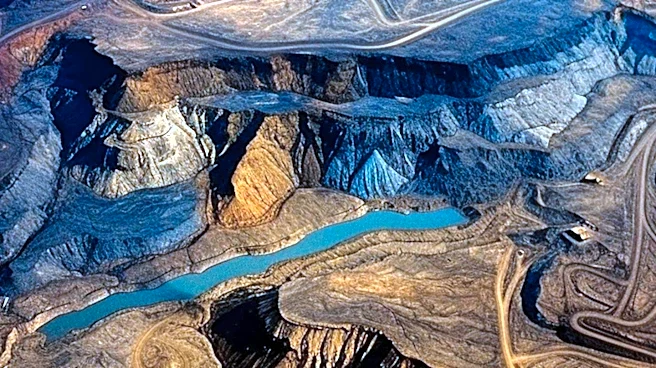
The immediate next steps involve identifying and implementing specific cooperation projects in critical minerals between Japan and Vietnam. This could include joint ventures in exploration, extraction, processing, and refining of rare earth elements and other critical minerals within Vietnam. Both countries will likely establish working groups to outline the scope and feasibility of these projects. The success of this initiative will depend on the scale of Vietnam's reserves, the efficiency of extraction and processing technologies, and the ability to establish a robust and cost-effective supply chain that can compete with existing sources. Further diplomatic engagements and technical exchanges are expected to solidify the framework for this long-term partnership.
Beyond the Headlines
This agreement underscores a growing global trend towards 'friend-shoring' and diversifying critical supply chains, driven by geopolitical considerations and the lessons learned from recent global disruptions. It highlights the strategic importance of critical minerals in the 21st-century economy, where access to these resources can dictate technological leadership and economic resilience. The partnership also reflects a nuanced approach to international relations, where countries seek to balance economic interdependence with national security interests. While complete decoupling from major suppliers like China may be challenging, such collaborations aim to build resilience and create alternative pathways for essential resources, potentially reshaping global trade patterns and resource allocation in the long run.