








What's Happening?
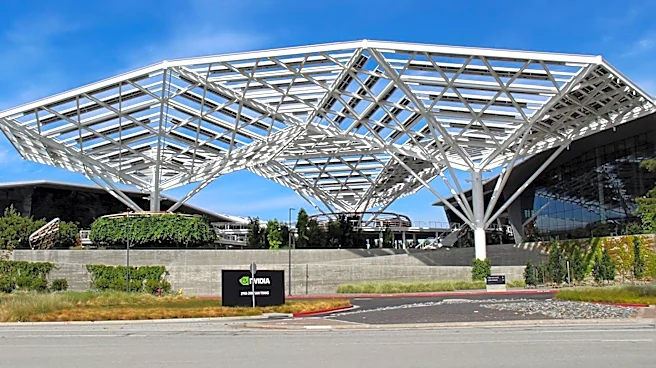
Nvidia has announced its new central processing unit (CPU) named Vera, designed specifically for artificial intelligence (AI) applications. This move marks Nvidia's entry into the CPU market, traditionally dominated by AMD and Intel. The announcement
was made during a keynote address at the Nvidia GTC conference. The Vera CPU is part of Nvidia's strategy to vertically integrate its systems, offering a complete computing solution rather than just individual chips. This development comes as the demand for AI-capable hardware continues to grow, with Nvidia already being a leader in the graphics processing unit (GPU) market. The Vera CPU is expected to compete directly with AMD and Intel's offerings, which have been the mainstay in data centers and cloud computing environments.
Why It's Important?
Nvidia's entry into the CPU market is significant as it challenges the long-standing dominance of AMD and Intel in this space. By offering a complete system that integrates both CPUs and GPUs, Nvidia aims to enhance the performance of AI applications, potentially setting a new standard in the industry. This could lead to increased competition, driving innovation and possibly lowering costs for consumers. The move also reflects the growing importance of AI in computing, as companies seek more efficient ways to process large amounts of data. For Nvidia, this expansion into CPUs could solidify its position as a leader in AI technology, while for AMD and Intel, it represents a new competitive threat that could impact their market share.
What's Next?
As Nvidia begins shipping the Vera CPU to clients, including major players like OpenAI and SpaceX, the market will closely watch how these companies integrate the new technology into their operations. The success of the Vera CPU could influence other tech companies to consider Nvidia's integrated systems over traditional setups. Meanwhile, AMD and Intel may respond by accelerating their own innovations or adjusting pricing strategies to maintain competitiveness. The broader tech industry will likely see increased investment in AI-specific hardware, as companies aim to capitalize on the growing demand for AI capabilities.