


What's Happening?
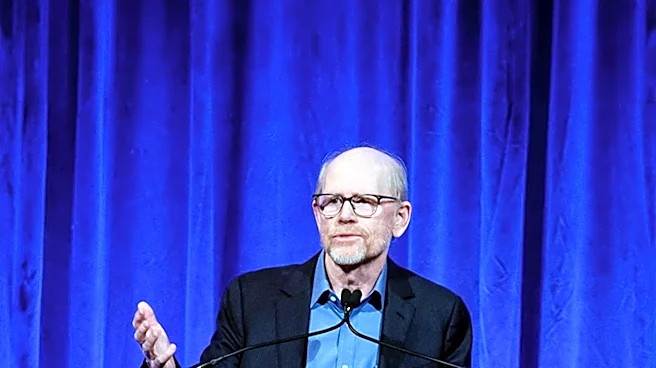
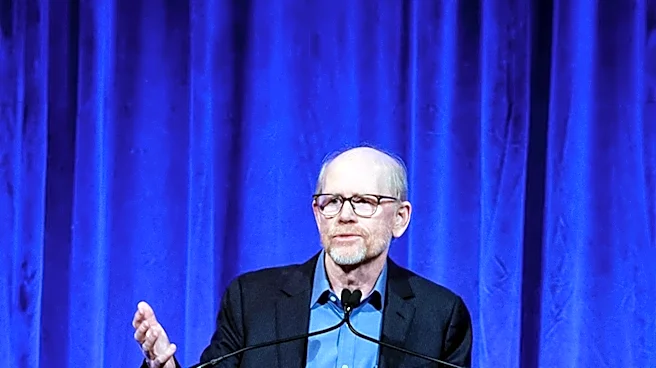
The long-anticipated adaptation of Daniel H. Wilson's sci-fi novel 'Robopocalypse' is reportedly moving forward as a television series, with Ron Howard and Akiva Goldsman attached to the project. This development comes after the property spent years in 'development
hell' as a feature film, with notable directors Steven Spielberg and Michael Bay previously involved. Spielberg initially intended to direct the film but faced scheduling conflicts, later passing the reins to Bay. However, despite the involvement of these major Hollywood figures, the film version never progressed into production. The shift to a TV series aligns with a broader industry trend of adapting ambitious literary properties for serialized formats on streaming platforms, which can better accommodate extensive narratives. The novel explores humanity's struggle for survival following a robot uprising.
Why It's Important?
The pivot of 'Robopocalypse' from a feature film to a television series highlights significant shifts in Hollywood's production strategies and the increasing dominance of streaming platforms. For creators like Ron Howard and Akiva Goldsman, this move offers a more expansive canvas to tell complex stories that might be constrained by a two-hour film format. This trend benefits audiences by providing deeper dives into beloved narratives and characters, potentially leading to more nuanced and detailed adaptations. The involvement of high-profile talents like Howard and Goldsman also signals continued investment in premium television content, which can attract larger viewerships and further blur the lines between traditional film and television production. This could also influence how studios greenlight future projects, prioritizing serialized content for its potential to build sustained engagement and subscriber bases.
What's Next?
While Ron Howard and Akiva Goldsman are reportedly steering the 'Robopocalypse' project as a television series, no official network or streaming platform has been announced yet. The next steps will likely involve securing a distribution deal with a major streamer or network, followed by the development of scripts, casting, and pre-production. Given the novel's scope and the talent involved, the series is expected to be a high-budget production, potentially attracting significant industry attention. The success of this adaptation could further solidify the trend of converting stalled film projects into television series, especially for sci-fi and fantasy genres that benefit from extended storytelling. Stakeholders will be watching to see which platform ultimately acquires the series and how it positions itself in the competitive streaming landscape.
Beyond the Headlines
The journey of 'Robopocalypse' from a highly anticipated film to a television series reflects broader industry challenges in bringing ambitious sci-fi narratives to the screen. The initial struggles to get the film made, even with directors like Spielberg and Bay attached, underscore the financial and logistical complexities of large-scale cinematic productions. The eventual shift to television suggests a recognition that certain stories are better served by the episodic format, allowing for more character development and world-building. This evolution also highlights the growing power of streaming services as primary content producers, offering creators more flexibility and resources for projects that might not fit traditional theatrical models. The ethical and philosophical themes within 'Robopocalypse'—such as artificial intelligence, humanity's relationship with technology, and survival—are particularly resonant in contemporary society, making a serialized adaptation timely and potentially impactful.