




What's Happening?
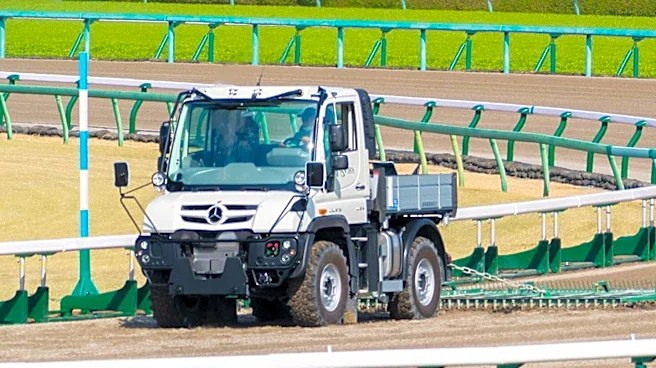
The Mercedes-Benz Unimog WaVe, equipped with a hydrogen combustion powertrain, has successfully completed its initial field test in Bayreuth. The development team is now in the final stages of refining the vehicle, with the project slated for conclusion
by the end of July 2024. Günter Pitz, head of powertrain development at Mercedes-Benz Special Trucks, expressed confidence in the project's future viability, highlighting the potential of hydrogen combustion for high-performance applications in specialized vehicle sectors. He specifically mentioned its applicability in construction sites, municipal services, and agriculture, where it could enable very low-emission driving and operation. Pitz emphasized the critical need for continued financial predictability through targeted funding from both public and private sectors to bring such vehicles to series production.
Why It's Important?
This development marks a significant step forward in the adoption of hydrogen combustion technology for heavy-duty and specialized vehicles in the U.S. and globally. It offers a potential pathway for decarbonizing sectors that are difficult to electrify with battery-electric solutions due to power demands, operational hours, or weight constraints. For industries like construction, municipal services, and agriculture, the Unimog WaVe could provide a low-emission alternative without sacrificing performance or the existing expertise in combustion engine technology. The call for sustained funding underscores the financial challenges and investment required to transition to new propulsion systems, highlighting the role of government incentives and private investment in driving green innovation and achieving climate goals.
What's Next?
With the field test complete and the project nearing its conclusion in July 2024, the next phase will likely involve further testing, certification, and the establishment of a clear path to series production. Mercedes-Benz will need to secure the necessary funding and partnerships to scale up manufacturing. The success of the Unimog WaVe could accelerate the development and adoption of hydrogen combustion engines in other specialized vehicle segments. Policy discussions around hydrogen infrastructure and incentives for hydrogen-powered vehicles will become increasingly important. The market will be watching for announcements regarding commercial availability and pricing, which will determine its competitiveness against traditional diesel and emerging electric alternatives.
Beyond the Headlines
The Unimog WaVe's hydrogen combustion powertrain represents a strategic move to leverage existing combustion engine expertise while addressing environmental concerns. This approach could offer a more palatable transition for industries heavily invested in internal combustion technology, as it allows for the retention of certain operational and maintenance practices. It also highlights the diversity of solutions being explored in the quest for decarbonization, moving beyond a sole focus on battery-electric vehicles. The project's success could influence future regulatory frameworks and industry standards for emissions in heavy-duty sectors. Furthermore, it contributes to the broader energy transition by demonstrating the viability of hydrogen as a clean fuel source, potentially stimulating investment in hydrogen production and distribution infrastructure.