






What's Happening?
The recently released film 'Hershey,' which chronicles the life of Milton S. Hershey, the founder of The Hershey Company, has received a review suggesting it lacks engaging storytelling despite its impressive production design. The movie, directed by
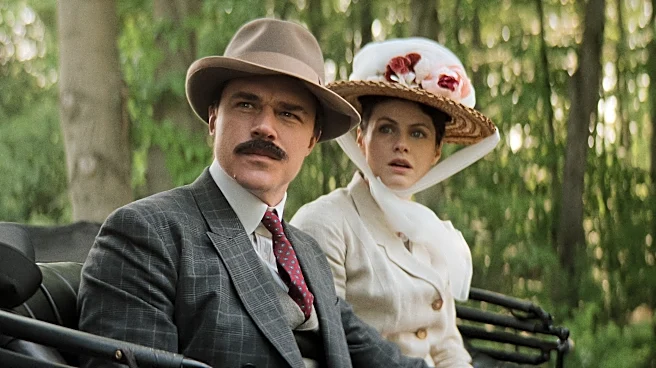
Mark Waters, stars Finn Wittrock as Milton Hershey and Alexandra Daddario as his wife, Kitty. The plot covers Milton Hershey's repeated failures, his eventual success in building a chocolate empire, and his philanthropic efforts, particularly his mission to help children in need. However, the review criticizes the film for rushing through setbacks and presenting an overly earnest and predictable narrative. The dialogue is described as old-fashioned and sometimes corny, detracting from the overall viewing experience. While Finn Wittrock is noted for bringing optimism to the role, Alexandra Daddario's performance as Kitty is highlighted as a strength, providing much-needed warmth and emotional depth to the story.
Why It's Important?
This review is important for the entertainment industry and potential audiences interested in biographical films. A critical assessment of a biopic, especially one about a well-known American industrialist like Milton Hershey, can influence box office performance and audience perception. For The Hershey Company, a film about its founder, even if critically mixed, can still serve as a form of brand exposure, reminding consumers of its historical roots and philanthropic legacy. However, a less-than-stellar review might temper expectations for a compelling narrative, potentially impacting the film's long-term cultural impact. The critique also highlights the challenges in adapting real-life stories into engaging cinema, particularly when attempting to portray historical figures in an overly positive light, which can lead to a lack of complexity and dramatic tension.
Beyond the Headlines
The review touches upon a deeper implication regarding historical accuracy and narrative choices in biopics. It notes that the film conveniently skips less flattering historical details, such as the initial restrictions on admission to the Hershey Industrial School, which excluded girls and children of color for decades. This selective storytelling raises questions about the responsibility of filmmakers to present a comprehensive and nuanced portrayal of historical figures, rather than an idealized version. While the film aims for a wholesome, family-friendly tone, omitting such details can be seen as a missed opportunity to explore the complexities of Hershey's legacy and the societal norms of his era. This approach can lead to a film that feels more like an advertisement than a genuine historical account, potentially influencing public understanding of historical figures and their contributions.