



What's Happening?
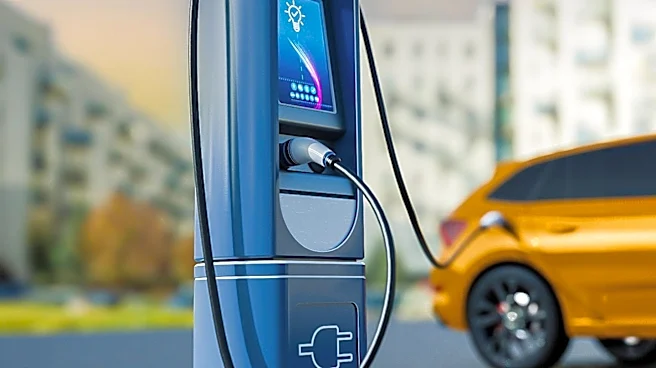
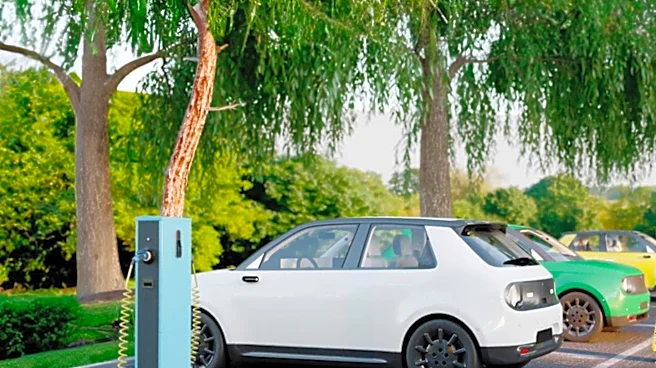
An EV fast-charging station located off the I-805 outside San Diego, California, has demonstrated significant success in customer retention and operational efficiency over 15 months. The station, equipped with eight fast-charging ports powered by Electric
Era’s chargers and an on-site battery, reports that approximately 80% of its charging sessions come from repeat drivers. This loyalty has persisted even after a 20-stall Tesla Supercharger opened less than two miles away, with the station experiencing a 41% increase in sessions from June to October. The station's high reliability, with 99.95% port availability, and user-friendly payment system (tap-to-pay without an app) are cited as key factors for customer satisfaction. Additionally, an on-site battery system helps manage electricity costs by charging during off-peak hours and supplying power during peak demand, resulting in an estimated $13,400 in annual savings by reducing peak grid demand and utilizing cheaper electricity.
Why It's Important?
This case study provides valuable insights for the burgeoning EV charging infrastructure industry in the U.S. It demonstrates that reliability and user experience are critical drivers for customer loyalty in the competitive EV charging market. The high rate of repeat customers suggests a sustainable business model for fuel retailers and other operators looking to transition to EV charging. The operational savings achieved through smart energy management, particularly the use of on-site batteries to mitigate peak demand charges, highlights a crucial strategy for profitability in an industry with fluctuating electricity costs. This model can help accelerate the adoption of EV charging stations by making them more economically viable for businesses, thereby supporting the broader national goal of expanding EV infrastructure and reducing reliance on fossil fuels.
What's Next?
The success of this San Diego station suggests a potential blueprint for future EV fast-charging developments across the U.S. Operators are likely to increasingly focus on enhancing charger reliability and simplifying the user experience to attract and retain customers. The integration of on-site battery storage systems is also expected to become more prevalent as a means to control operating costs and improve profitability, especially in regions with variable electricity pricing. As more EV charging options emerge, competition will likely intensify, pushing operators to innovate further in service quality and cost efficiency. This trend could lead to a more robust and user-friendly national EV charging network, encouraging greater EV adoption among consumers.
Beyond the Headlines
The success of this station points to a broader shift in consumer behavior and expectations within the automotive sector. EV drivers, unlike traditional gasoline vehicle owners, spend a significant amount of time (median 31 minutes) at charging stations, creating new opportunities for adjacent businesses like convenience stores, cafes, and restaurants. This extended dwell time can transform charging stations into community hubs or retail destinations, offering additional revenue streams for operators. Furthermore, the emphasis on reliability and ease of use reflects a growing demand for seamless technological integration in daily life. The data from this station underscores that for the EV transition to be truly successful, the charging experience must be as convenient and dependable as traditional fueling, addressing range anxiety and operational friction for widespread adoption.