




What's Happening?
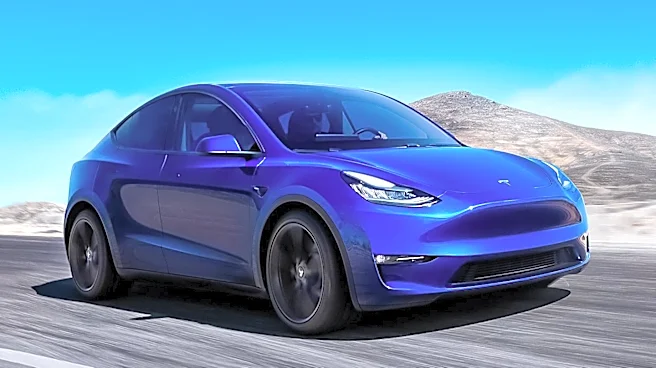
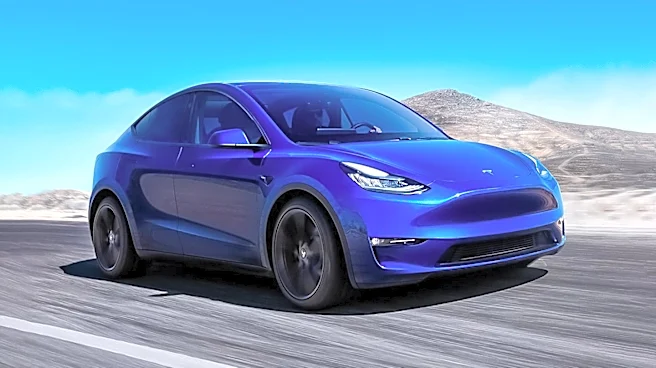
Tesla has introduced several changes in its 2026 Model Y, which are causing a learning curve even for experienced Tesla drivers. The most notable change is the removal of the right-side control stalk, which has been replaced by a control screen function
for shifting gears. Drivers now need to slide an avatar of the car on the screen to shift between forward and reverse, a feature that has not been well-received by all users. Additionally, Tesla's Full Self Driving (FSD) software continues to evolve, with the latest version, FSD V14, available only on newer models equipped with 'Hardware 4'. This has left some older models with the previous FSD V12. The 2026 models also feature new steering wheel controls and seat adjustments, with some functions now integrated into the display screen. These changes reflect Tesla's ongoing innovation in vehicle design and functionality.
Why It's Important?
The changes in Tesla's 2026 Model Y highlight the company's commitment to innovation and its impact on the automotive industry. By integrating more functions into the control screen, Tesla is pushing the boundaries of traditional car design, which could influence other manufacturers to adopt similar technologies. However, this shift also raises concerns about user-friendliness and safety, as drivers may find it challenging to adapt to new controls, potentially leading to distractions. The evolution of Tesla's FSD software underscores the competitive nature of autonomous driving technology, with Tesla aiming to maintain its leadership in this field. The decision to limit certain features to newer models could affect customer satisfaction and loyalty, as existing Tesla owners may feel pressured to upgrade to access the latest technology.
What's Next?
As Tesla continues to innovate, it is likely that the company will receive feedback from users regarding the new control features, which could lead to further refinements in future models. The automotive industry will be watching closely to see how consumers respond to these changes, as it may influence broader trends in vehicle design and technology integration. Additionally, regulatory bodies may scrutinize the safety implications of such innovations, potentially leading to new guidelines or standards for in-car technology. Tesla's ongoing development of its FSD software will also be a key area of focus, as the company seeks to enhance its capabilities and address any limitations identified by users.