







What's Happening?
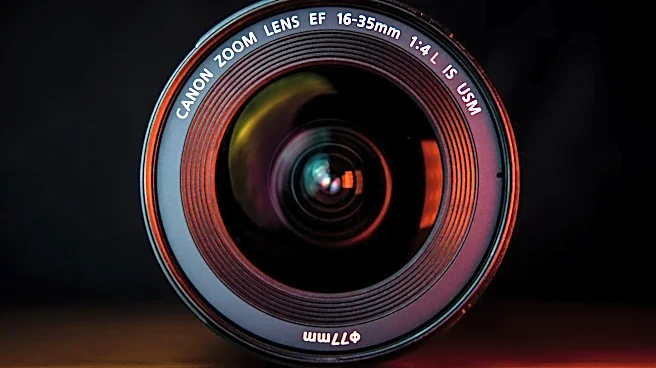
Several Canon RF lenses are being highlighted as underrated, offering image quality comparable to Canon's L-series glass despite often being dismissed due to specific specifications or overshadowed by pricier alternatives. James Reader identifies six
such lenses, including the Canon RF 28mm f/2.8 pancake prime, which is praised for its compact size and versatility for travel, landscapes, and video, with sharpness rivaling L glass. The Canon RF 135mm f/1.8, an L-series lens, is considered neglected due to the popularity of the RF 85mm f/1.2, yet it offers superior autofocus, image stabilization, and video performance at a lower price. The Canon RF 24-105mm f/4 is defended for its travel utility and portrait capabilities, despite being less 'fast' than other zooms. Other lenses mentioned include the RF 85mm f/2 macro and the RF 100-400mm, which provide excellent value and performance for their respective uses. The shift in lens evaluation now prioritizes the finished image over how the lens achieves it, including reliance on digital corrections for distortion and vignetting.
Why It's Important?
This re-evaluation of Canon RF lenses is significant for photographers in the U.S. seeking high-quality optics without necessarily investing in the most expensive options. It challenges the perception that only top-tier, high-aperture lenses deliver professional results, suggesting that more affordable or less-hyped lenses can perform comparably. This insight can influence purchasing decisions, allowing photographers to optimize their gear investments and achieve excellent image quality within budget constraints. For Canon, it reinforces the breadth and quality of its RF lens lineup, potentially increasing sales of these 'underrated' lenses and broadening its market appeal. The emphasis on the final image over raw specifications also reflects a maturing understanding of modern lens design, where digital corrections play an integral role in optical performance, impacting how consumers and professionals assess lens value.
What's Next?
The discussion around underrated Canon RF lenses may lead to increased interest and sales for these specific models, potentially influencing Canon's future lens development and marketing strategies. Photographers may become more inclined to explore less obvious lens choices, relying on real-world performance reviews rather than solely on specifications or price. This trend could encourage other camera manufacturers to highlight the value proposition of their mid-range or less-advertised lenses. Furthermore, the acceptance of digital corrections as a standard part of lens performance suggests that future lens designs across the industry will continue to integrate software-based enhancements, further blurring the lines between optical and computational image quality. This could lead to more compact, versatile, and cost-effective lenses becoming available to consumers.
Beyond the Headlines
The shift in evaluating lens performance, prioritizing the 'finished image' over raw optical specifications, signifies a broader evolution in photography technology and consumer expectations. Historically, lens quality was almost exclusively judged by its physical glass elements and mechanical construction. However, with advancements in in-camera and post-processing software, digital corrections for aberrations like distortion and vignetting have become commonplace and highly effective. This means that a lens that might have been considered optically imperfect in the past can now produce stunning results with software assistance. This trend democratizes high-quality imaging, making it accessible through more affordable lenses. It also highlights the increasing convergence of hardware and software in modern photography, where the camera system as a whole, rather than just individual components, determines the final output. This could lead to more innovative lens designs that leverage computational photography to achieve results previously only possible with extremely expensive and complex optical designs.