






What's Happening?
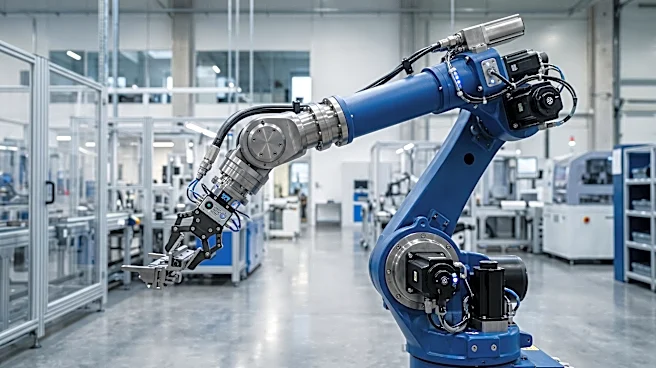
Skild AI, a U.S.-based company, has successfully raised $1.4 billion in a funding round led by Japan's SoftBank. This significant investment, announced in January 2026, places Skild AI's valuation at over $14 billion. The funding highlights a notable
trend in the artificial intelligence sector, particularly in Physical AI, where substantial capital is being deployed. This investment by a major Japanese firm into a U.S. AI company also underscores the growing international collaboration and investment in advanced technological fields. The scale of this single U.S. funding round by Skild AI is particularly striking when compared to the combined robotics investments in Japan during 2025, which amounted to approximately a quarter of Skild AI's single round.
Why It's Important?
This substantial investment in Skild AI is important for several reasons. Firstly, it signifies a robust investor confidence in the U.S. Physical AI sector, indicating a belief in its future growth and profitability. The involvement of SoftBank, a prominent global investment firm, suggests a strategic interest in leveraging U.S. technological advancements for broader market applications. This capital injection could accelerate Skild AI's research, development, and market expansion, potentially leading to breakthroughs in Physical AI technologies. Furthermore, the disparity in funding between U.S. and Japanese robotics companies, as highlighted by this investment, points to a potential competitive advantage for U.S. firms in attracting large-scale capital, which could further solidify their leadership in the global AI landscape. This could also influence talent migration and innovation hubs, drawing more resources and expertise to the U.S. AI ecosystem.
What's Next?
The immediate next steps for Skild AI will likely involve leveraging this significant capital to scale its operations, enhance its technological capabilities, and potentially expand its market reach. This could include increased hiring of specialized talent, further investment in R&D, and strategic partnerships to integrate its Physical AI solutions across various industries. For the broader U.S. AI sector, this investment may encourage more venture capital and private equity firms to invest in similar high-growth AI companies, fostering a more dynamic and competitive environment. Internationally, this could prompt other countries, particularly Japan, to re-evaluate their investment strategies in Physical AI to remain competitive and foster their domestic innovation ecosystems.
Beyond the Headlines
Beyond the immediate financial implications, this investment in Skild AI reflects a deeper trend towards the industrialization and commercialization of advanced AI. The focus on 'Physical AI' suggests a shift from purely software-based AI to systems that interact with the physical world, which has profound implications for automation, manufacturing, logistics, and even daily life. This development raises ethical considerations regarding the future of work and the integration of intelligent machines into human-centric environments. The cross-border nature of the investment also highlights the increasing globalization of technology and capital, potentially leading to more interconnected and interdependent innovation ecosystems worldwide. This could also spark discussions about national security and technological sovereignty as critical AI capabilities become more globally distributed.