







What's Happening?
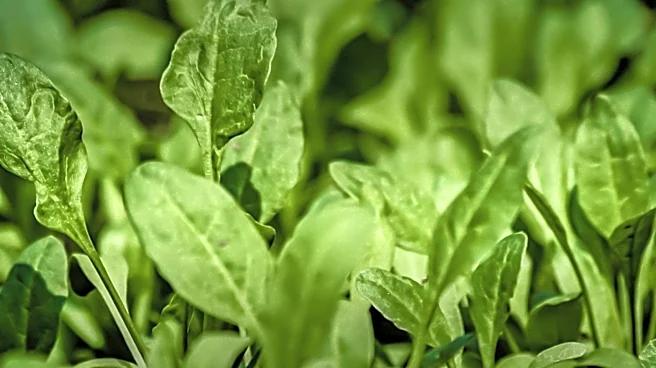
A gardening practice gaining attention involves planting comfrey at the base of compost bins to capture nutrient-rich runoff and enhance garden fertility. This method leverages comfrey's deep root system to absorb water-soluble nutrients that might otherwise
leak away from the compost. The harvested comfrey leaves can then be used as a liquid feed, mulch, compost activator, or 'chop-and-drop' material for other hungry plants in the garden. This creates a 'comfrey loop' where compost runoff feeds comfrey, comfrey feeds the garden, and the garden's organic material returns to the compost, fostering a continuous cycle of fertility. The Bocking 14 variety of comfrey is specifically recommended due to its sterility, preventing unwanted self-seeding.
Why It's Important?
This practice is significant for promoting sustainable and resilient gardening systems, particularly in regions with wet climates where nutrient leakage from compost bins is common. By capturing otherwise lost fertility, gardeners can reduce their reliance on external fertilizers, leading to cost savings and a more environmentally friendly approach. For U.S. gardeners, this method offers a practical way to maximize the efficiency of their composting efforts and improve soil health naturally. It encourages a shift in perspective, viewing overlooked garden corners as opportunities for productivity and resource conservation. The adoption of such 'tiny systems' contributes to overall garden resilience, making gardens more self-sufficient and less susceptible to nutrient depletion.
What's Next?
The concept of integrating comfrey with compost systems is likely to gain wider recognition among home gardeners and permaculture enthusiasts. Educational content, such as online tutorials and gardening workshops, may increasingly feature this technique. We might see more garden product innovations, such as specialized compost bins designed to facilitate comfrey planting or tools for easier comfrey harvesting and processing. As awareness grows, more gardeners may experiment with similar 'hidden loops' in their gardens, seeking to optimize resource use and minimize waste. This could lead to a broader movement towards more integrated and self-sustaining garden ecosystems, influencing gardening practices across various scales.
Beyond the Headlines
Beyond its practical applications, the 'comfrey loop' embodies a deeper philosophy of permaculture and ecological thinking, emphasizing the interconnectedness of garden elements and the value of 'waste' as misplaced fertility. It encourages gardeners to observe their environments more closely, identifying opportunities to stack functions and strengthen natural cycles. This approach fosters a mindset of resourcefulness and resilience, moving away from linear systems of input and output towards circular, regenerative processes. It also highlights the importance of plant selection, demonstrating how specific plant characteristics can be harnessed to solve common gardening challenges. This simple yet effective method can inspire a more holistic understanding of garden management, promoting biodiversity and long-term ecological health.