








What's Happening?
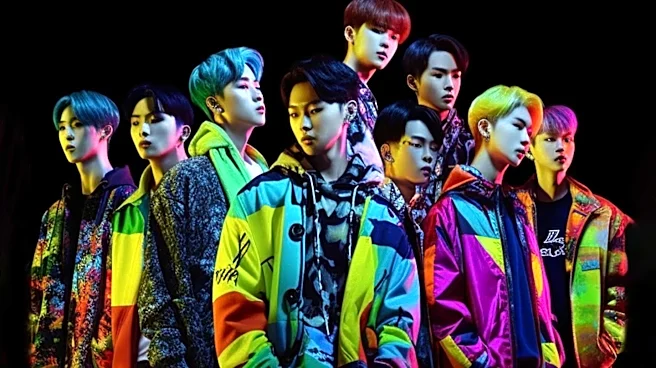
The new five-member virtual idol group, Hypeverse, is set to release its English-language pre-debut single titled 'Weirdo' on Wednesday, with a primary focus on the North American audience. According to their agency, Philandart Studio, the single's lyrics
are entirely in English, and the group members will communicate predominantly in English. This strategic move aims to introduce their musical characteristics and future direction ahead of their official debut, which is anticipated in the first half of next year. Hypeverse plans to visually fuse Asian and Western elements in its upcoming activities. The emergence of virtual idol groups like Hypeverse, alongside others such as Isegye Idol and Plave, signifies a growing trend and new contender in the K-pop scene.
Why It's Important?
Hypeverse's direct targeting of the North American market with an English-language single marks a significant strategic evolution in the global expansion of K-pop. This approach bypasses traditional language barriers, aiming for immediate accessibility and broader appeal among U.S. audiences. For the U.S. entertainment industry, this signifies a new wave of competition and innovation, as virtual artists offer unique advantages in terms of creative control, longevity, and adaptability. It could influence how U.S. music labels approach artist development and marketing, potentially leading to increased investment in virtual talent or hybrid human-virtual groups. This development also highlights the growing technological integration within the music industry, pushing boundaries of what constitutes an 'artist' and how music is consumed, potentially reshaping fan engagement models and intellectual property considerations.
What's Next?
The release of Hypeverse's English pre-debut single will be a critical test of the North American market's reception to a fully virtual K-pop group. Success could pave the way for more virtual artists to directly target Western audiences, potentially leading to a proliferation of such groups. We might see increased investment in advanced AI and motion capture technologies to enhance the realism and interactivity of virtual idols. The industry will closely watch Hypeverse's fan engagement strategies, particularly how they build emotional connections without physical presence. This could also spark discussions among U.S. music executives about the viability and scalability of virtual artists, potentially leading to new business models for talent management and content creation that blend technology with entertainment.
Beyond the Headlines
The rise of virtual K-pop groups like Hypeverse delves into profound questions about authenticity, human connection, and the future of artistry in a technologically advanced world. While offering creative freedom and overcoming logistical challenges, virtual idols challenge traditional notions of performance and fan-artist relationships. This phenomenon raises ethical considerations regarding the nature of 'stardom' and the potential for emotional manipulation, as fans form attachments to non-existent entities. Culturally, it reflects a growing comfort with digital personas and simulated experiences, blurring the lines between reality and virtuality. The fusion of Asian and Western elements in Hypeverse's visual strategy also speaks to a broader trend of global cultural hybridization, where digital platforms facilitate the seamless blending of diverse aesthetic influences, potentially creating a new universal pop culture language.