




What's Happening?
Chinese battery giant CATL is forming strategic partnerships with Korean materials suppliers and licensing its technology to U.S. automakers like Ford to circumvent increasing U.S. and EU regulations aimed at reducing reliance on Chinese-made electric
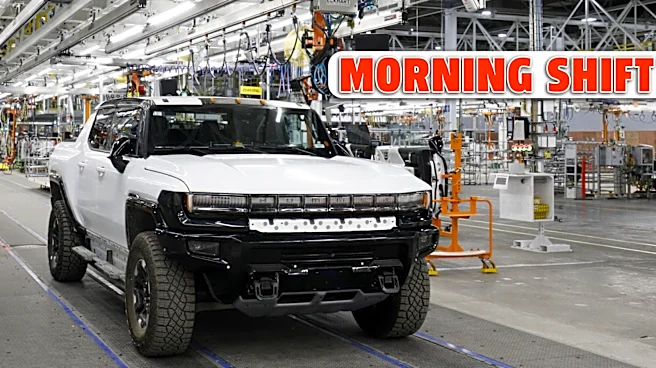
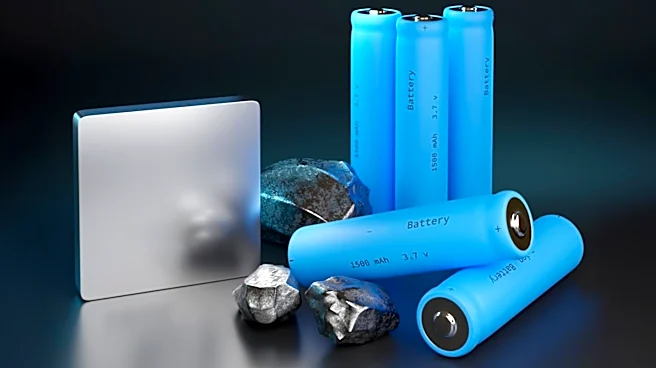
vehicle (EV) batteries. Ford announced on November 18 that it has begun mass-producing batteries at its Michigan plant using CATL's LFP manufacturing technology. This move is expected to utilize Korean-made battery materials. In Europe, CATL is expanding its production bases through joint ventures with automakers such as Stellantis and Volkswagen. Korean companies are also playing a crucial role; Posco Group recently signed a long-term contract to supply lithium to CATL from 2026 to 2028, marking its first supply to a Chinese battery manufacturer. Additionally, Korean electrolyte producer Enchem will supply 350,000 tons of electrolyte to CATL through 2030, and Solus Advanced Materials is providing copper foil from its Hungarian plant to CATL's European factories. These collaborations highlight a broader strategy by Chinese battery makers to maintain global market share amidst tightening international trade policies.
Why It's Important?
This strategic maneuvering by CATL has significant implications for the U.S. EV market and its goal of reducing dependence on Chinese supply chains. By licensing technology to U.S. manufacturers like Ford and integrating Korean suppliers, CATL can indirectly participate in the U.S. market while potentially allowing Ford to qualify for incentives under regulations like the Prohibited Foreign Entity (PFE) rules. These rules exclude companies from countries of concern, including China, from receiving Advanced Manufacturing Production Credits. The partnerships also present a mixed outcome for Korean battery manufacturers. While Korean material suppliers benefit from new contracts, major Korean battery makers like LG Energy Solution, SK On, and Samsung SDI face increased competition. These Korean battery manufacturers had hoped to capitalize on U.S. restrictions against Chinese competitors, but CATL's circumvention strategies could undermine their growth prospects and market share, which has already seen a decline in the global EV battery market outside China.
What's Next?
The legislative landscape in Europe, particularly the proposed Industrial Accelerator Act (IAA), will further shape CATL's strategy. If enacted, the IAA would require EVs to contain a minimum proportion of EU-made batteries and components for subsidies and public procurement benefits, and impose conditions on investments from countries with over 40% global production capacity, effectively targeting China. This could accelerate CATL's efforts to establish joint ventures with local businesses or transfer technology within the EU, further solidifying its partnerships with Korean battery materials companies that already have European operations. In the U.S., the gradual tightening of PFE regulations will continue to influence battery supply chain decisions, pushing for reduced reliance on PFE-linked components. The energy storage system (ESS) market is also a key area to watch, as Ford plans to supply ESS manufactured using CATL technology from its Kentucky plant by 2027, potentially increasing competition for Korean battery makers in this sector.
Beyond the Headlines
The intricate web of partnerships between Chinese battery manufacturers, Korean suppliers, and Western automakers reveals a complex global supply chain adapting to geopolitical pressures. This trend highlights the limitations of protectionist policies in a highly interconnected global economy, as companies find innovative ways to navigate trade barriers. The licensing of technology, rather than direct investment, allows Chinese companies to maintain influence and market access without directly violating certain restrictions. This also raises questions about the true origin of components and the effectiveness of 'decoupling' strategies. Furthermore, the emphasis on security concerns, particularly regarding energy storage systems in AI data centers, suggests that geopolitical considerations extend beyond economic competition to national security, potentially creating new non-tariff barriers for Chinese-made products in critical infrastructure sectors. This evolving landscape underscores a shift towards more localized, yet globally integrated, supply chains driven by both economic efficiency and geopolitical imperatives.