





What's Happening?
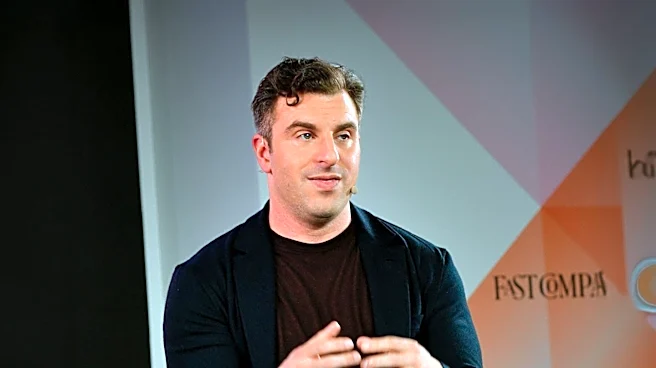
Airbnb co-founder and CEO Brian Chesky has articulated that replacing a founder-led chief executive involves more than just filling the CEO position; it also requires addressing the critical role of product strategy and vision. According to Chesky, founder-CEOs
often function as de facto chief product officers, possessing deep institutional knowledge of how their company's product was built, developed, and can be reinvented. He stated on social media platform X that founders can hold the entire product architecture in their heads and have the authority to reshape it. This perspective suggests that while a new CEO can be appointed, the product leadership exercised by the founder often remains unaddressed, creating a significant gap. Chesky himself applies this approach at Airbnb, describing his role as the company's chief product officer and maintaining direct involvement in operations and product development. This hands-on style has been noted, with a Fortune report highlighting executive departures during his 'founder mode' management approach.
Why It's Important?
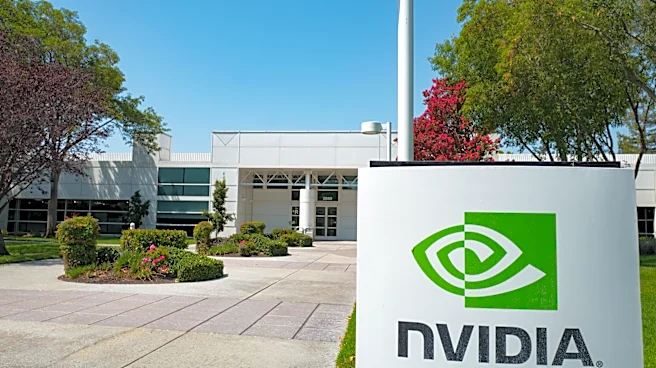
Chesky's insights are particularly relevant for technology companies, where the connection between leadership and product development is often profound. Founders typically possess unique institutional knowledge regarding product evolution, customer value propositions, and long-term strategic direction. The challenge of founder succession, therefore, extends beyond traditional executive replacement to encompass the continuity of product leadership. This issue is highlighted by discussions around leadership succession at companies like Nvidia, where founder and CEO Jensen Huang's close association with technological direction and product roadmap has been central to the company's success. Chesky's argument implies that conventional succession planning, which primarily focuses on the CEO role, may overlook the product-related responsibilities that are integral to a founder's contribution, potentially impacting innovation and strategic direction in the long term. This could affect how boards and investors approach leadership transitions in founder-led tech firms.
What's Next?
As Airbnb continues to expand its business beyond traditional home-sharing, including experiences and hotel inventory, the emphasis on product strategy remains crucial. The company reported a 17% year-on-year revenue increase to $3.6 billion in Q2 2026, with gross booking value up 16% to $27.2 billion. For Q3 2026, Airbnb anticipates revenue between $4.69 billion and $4.77 billion. Chesky's comments underscore the ongoing distinction between managing an established business and continuously shaping its product direction. This perspective suggests that future succession planning in founder-led companies, especially in the tech sector, may need to evolve to explicitly account for product leadership alongside executive capabilities. Companies might explore new roles or structures to ensure that the deep product understanding typically held by founders is effectively transferred or maintained after their departure, potentially influencing how leadership teams are constructed and how product development is managed at the highest levels.
Beyond the Headlines
The deeper implication of Chesky's argument lies in the recognition that a founder's departure can create a void not just in executive leadership but also in the very essence of a company's innovation engine. This raises questions about the sustainability of product-driven growth in the absence of the original visionary. It suggests that the 'founder mode' of management, while potentially leading to executive turnover, might also be a necessary phase for maintaining product integrity and strategic agility in rapidly evolving markets. The challenge is not merely to find a new CEO but to cultivate a culture and structure that can replicate or distribute the founder's unique product intuition and authority. This could lead to new models of leadership succession that prioritize product stewardship, potentially influencing corporate governance and the valuation of founder-led companies based on their ability to institutionalize product vision beyond the founder's tenure.